
Bessemer Blast Ball
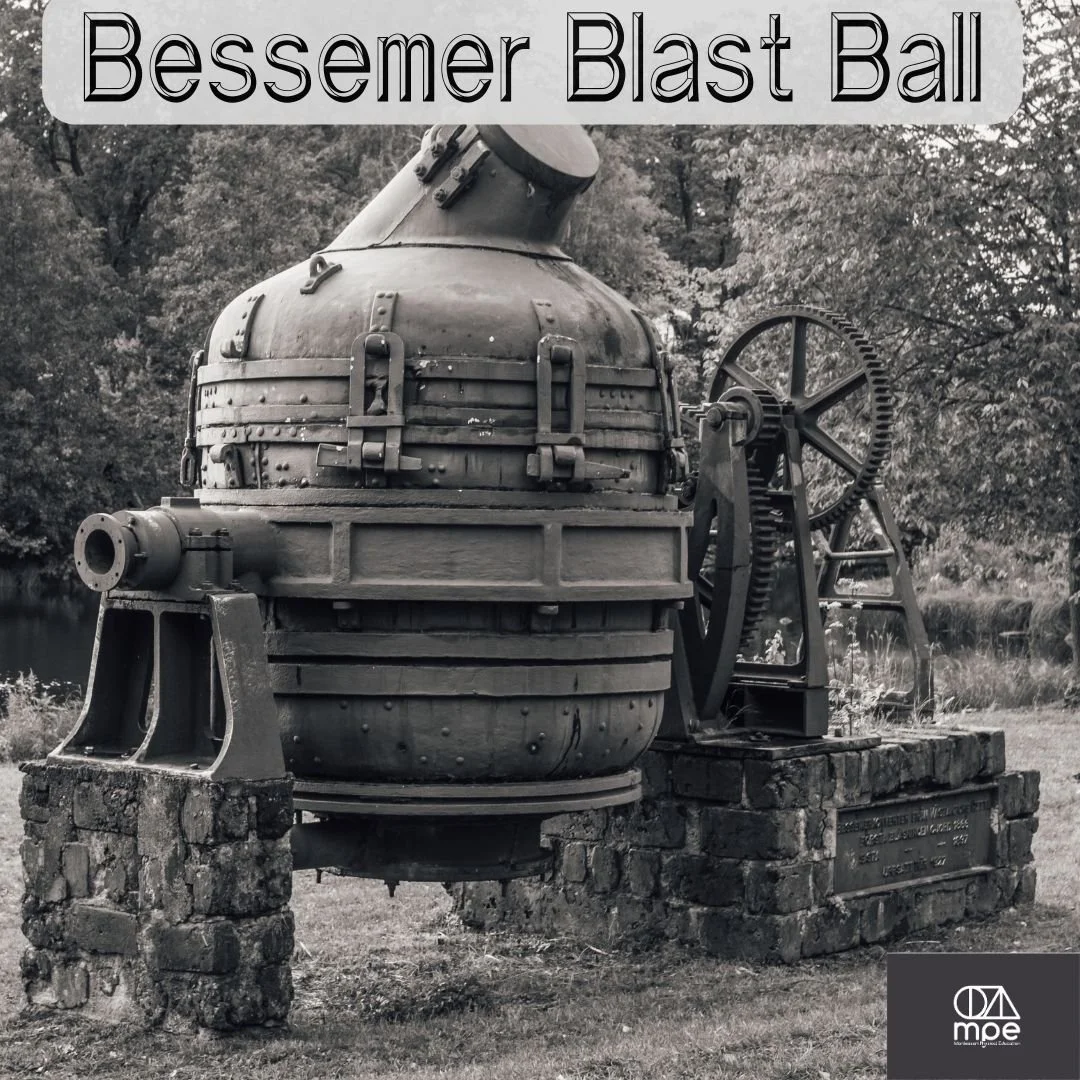
Bessemer Blast Ball
During the Industrial Revolution, demand for strong, affordable steel soared for railroads, buildings, and machines. Traditional steel was slow and costly to make, with only small batches produced by skilled craftsmen.
Everything changed in the 1850s with Henry Bessemer’s groundbreaking idea: the Bessemer Process. This clever new method meant workers could transform tons of molten iron into strong steel in just 15–20 minutes! By blowing air through the molten iron, unwanted materials were burned away, creating a layer of waste called slag. Suddenly, steel became cheaper, stronger, and available for building railroads, skyscrapers, ships, bridges, and countless innovations. The Bessemer Process didn’t just improve steelmaking—it launched a new era of industry and possibility.
Students learn how the Bessemer Process works by playing Bessemer Blast Ball, a dodgeball-style game that models steelmaking steps and chemistry, and shows why this method was vital during the Industrial Revolution.
Materials:
• A large play area (indoor or outdoor)
• One to two sets of large wooden blocks (like oversized Jenga)
• Many soft dodgeballs
• Cones or rubber disc dots if outside
Minimum Number of Students Needed:
This game can be played with at least 4 players, but about 15 is ideal.
Prior Knowledge:
No prior knowledge needed! For the best experience, introduce Bessemer Blast Ball when students are exploring the Industrial Revolution or chemistry. It's a perfect way to wrap up a unit and lead into new topics.