
Glaciers and Ice Floes
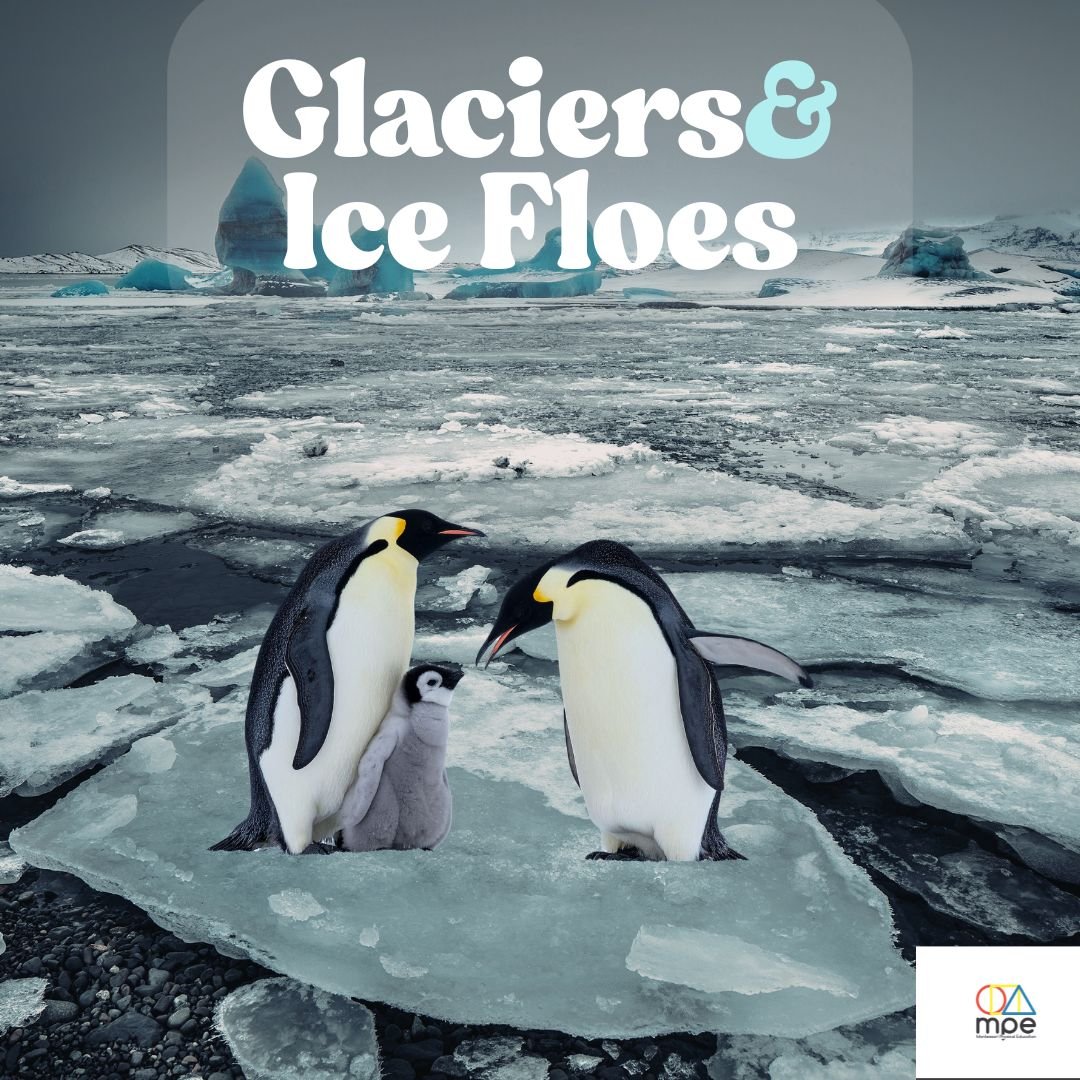
Glaciers and Ice Floes
Introduction:
Students will understand how shrinking ice impacts Antarctic food webs by simulating the roles of penguins, orcas, and fish through an active tag game. The main objective is to teach how ice loss disrupts animal survival and the balance of ecosystems. This activity also supports interdisciplinary studies of Antarctica, where students explore animal life, environments, and systems. The game's surface function is a predator–prey tag game that models a simple food web, allowing students to experience these relationships through foraging, hunting, evasion, and cooperation.
Beneath this structure, the game reveals a deeper concept. As play continues, glaciers and ice floes disappear. This changes how safe spaces work and forces students to adapt. Without direct instruction, students feel the effects of geological change. They face fewer safe spaces, more risk, and increased ecosystem pressure.
While the game appears focused on animals and food webs, its primary objective is to deepen students' understanding of Earth and environmental sciences by illustrating how geological processes—such as changes in ice and landforms—impact living systems. Through gameplay, students observe these changes, which leads to structured discussions about glaciers, ice melt, and global warming. The activity is designed to prompt reflection on how geological processes affect survival, balance, and resilience within ecosystems.
By embedding complex Earth science concepts inside an active, cooperative game, students engage both cognitively and physically, discovering systems thinking through experience rather than lecture. The result is a lesson that feels like play, but supports rich integration across biology, geology, climate science, and physical education.
Materials:
· Large playing area (outside or the gym)
· Lots of tennis or soft foam balls
· Eight to ten hula-hoops
· Colored pennies or jerseys
· Optional
o Buckets to hold the collected balls
o Mini cones with an open top to hold tennis balls
Minimum Required Students for the Game: You could play this game with as few as five players (2 orcas and 3 penguins), but this game is much better with a whole class (20+).
Plug this game into your curriculum any way you choose: launch an Antarctic adventure, spark a food web investigation, or supercharge your geology and environmental lessons.