
Liver Ball
Liver Ball
Introduction
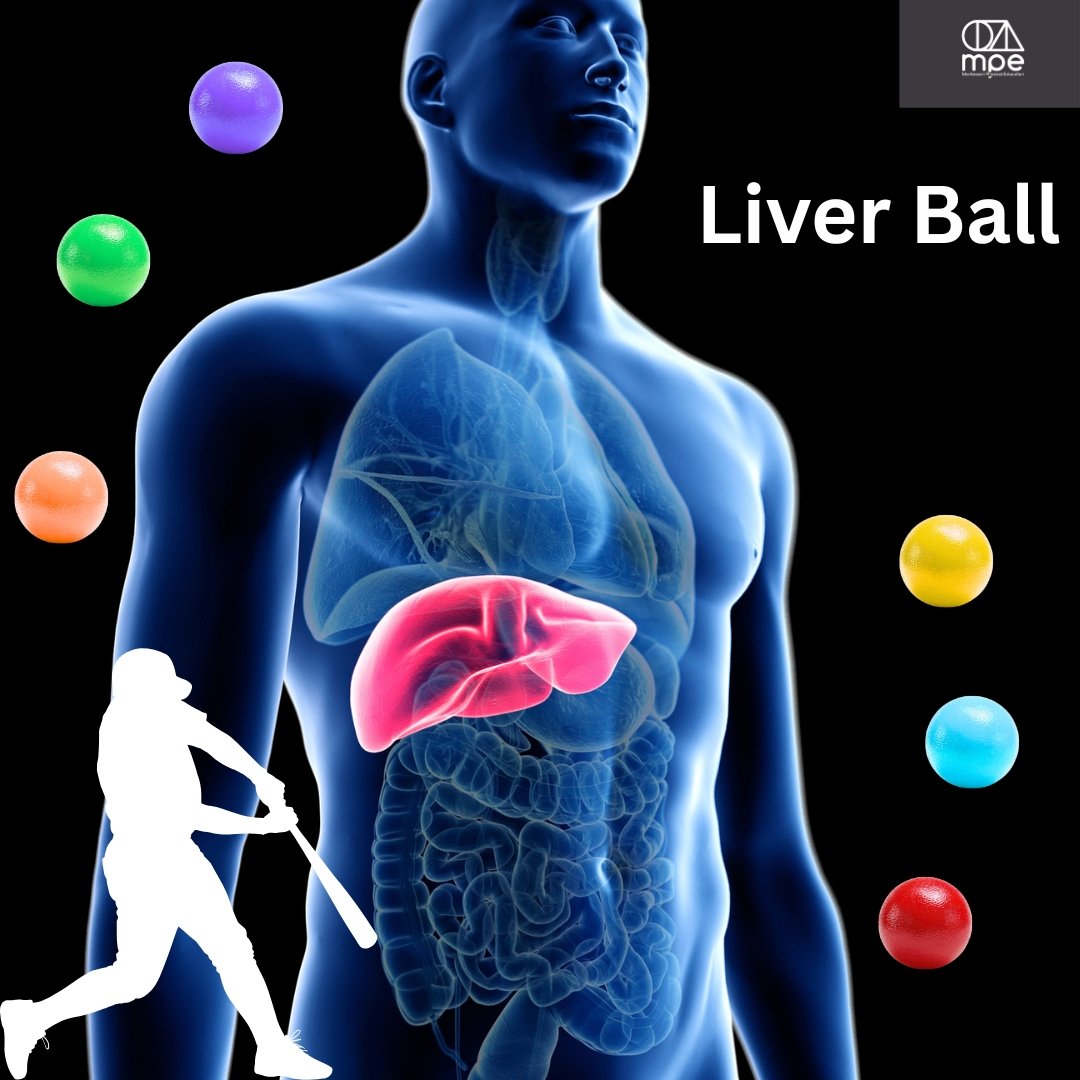
Liver Ball is a baseball-style game that connects PE with a study of the human body, specifically the liver. Students hit, run, throw, catch, pass, and dodge while the rules of the game loosely simulate some of the jobs the liver performs. The defense represents the liver. Five colors of dodgeballs represent nutrients and other useful substances that the liver is constantly processing, storing, creating, synthesizing, and regulating. A sixth color, red, represents a toxin and completely changes what the defense must do. Scoring is similar to golf: the lowest score wins. Any points scored by the batting team are actually recorded against the team playing defense. In other words, the better the "liver" performs, the lower its score will be. The game is not intended to be a perfect simulation of liver function. Instead, it gives students a physical experience they can connect back to what they are learning about the liver in biology or human anatomy.
At a Glance
· The teacher secretly selects a colored ball and pitches it underhand. The batter has to recognize the color, hit the ball, and run to the matching far hoop. The defense has to recognize the same color, field the ball, and get it to that hoop before the runner.
· If the ball beats the runner, it is a force out. If the runner gets there first, one point is scored against the defense.
· Every fair hit also activates any runners already on base, so the defense may have several colored balls and runners to deal with at once.
· A red ball represents a toxin. There is no red base. Instead, the red batter runs anywhere in the playing area and tries to avoid being hit with the red ball. The defense has to eliminate the toxin before it can go after any of the other runners.
· At the end of the game, the team that allowed the fewest points while playing defense wins.
Materials
· Five pairs of colored hula hoops: blue, purple, orange, yellow, and green
· Blue, purple, orange, yellow, and green 6-inch, hand-sized dodgeballs dodgeballs that correspond reasonably well with the hoops
· Red dodgeballs
· One large container or bin to hold the dodgeballs next to the pitcher
· Cricket bat, plastic bat, or hard foam bat
· Cones to establish the playing boundaries or basketball court lines in a gym
· Something to keep score
Number of Players
At least 10 players, or 5 vs. 5. The game works well with larger groups. More defenders mean more passing and communication, while more offensive players creates the possibility of having several runners on base when a toxin enters the game.
Previous Knowledge
This lesson works best alongside a study of biology, human anatomy, or body systems. Students do not need an extensive understanding of the liver before playing, but some previous exposure makes the final discussion more meaningful. Students should also have some basic experience striking a ball and throwing and catching. Familiarity with baseball helps, but it is not necessary. In fact, several traditional baseball rules intentionally do not apply.