
Tchoukball
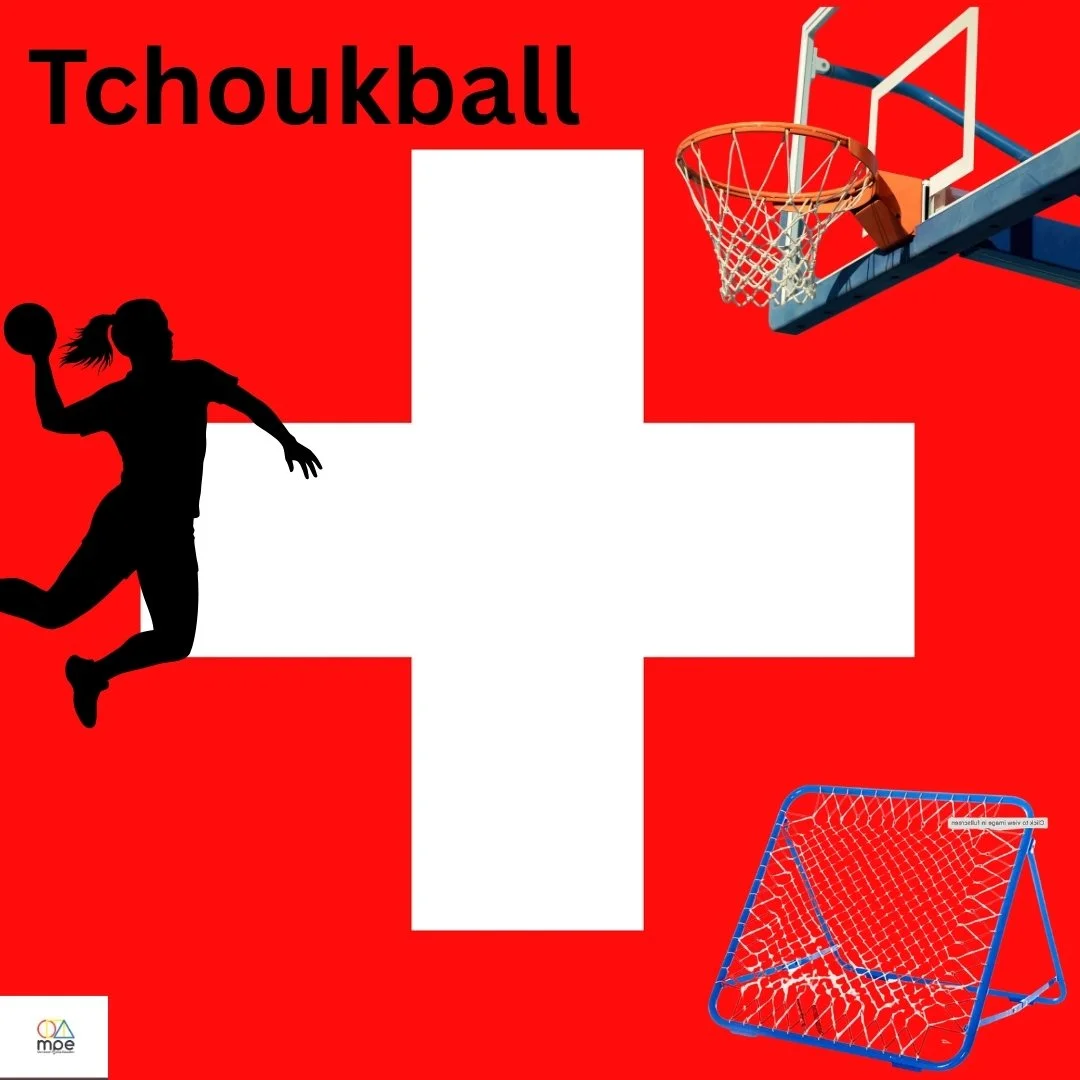
Tchoukball
In the United States, most people have not heard of the sport Tchoukball. Fewer can pronounce the name of the game correctly. Before you feel too culturally insensitive, don’t worry; this word is not another language. It actually is an onomatopoeia for the sound the ball makes when it bounces off the specialized rebounder used in the game for scoring. So, where did Tchoukball come from?
Tchoukball was invented by Swiss biologist and physician Dr. Hermann Brandt, who was from Geneva. As a biologist and physician particularly interested in sports medicine, he was concerned with the number of injuries in “traditional” sports. One of his major concerns was the physicality that many sports imposed, which could cause unnatural movements and injury. He recorded these concerns in his book From Physical Education to Sport through Biology. He would distill his message into his now-famous paper, Scientific Criticisms of Team Sport, which won the Thulin Award.
Dr. Hermann Brandt questioned the educational purpose of sport. He believed sport shouldn't simply be about producing champions. In his view, physical education should help develop the whole person and contribute to a healthier society. He wrote: “A man/woman's personality is of worthy nature only if his psychological and social behavior is meritorious; man's place in society is situated at the level of his personality and its social repercussions, and Physical Education needs to integrate nervous and cerebral functions to enable man to evolve towards the most perfect possible individual and social structure.” I wholeheartedly believe that sport is more than a physical game and should connect deeply to the rest of the world.
Similar to what I love to do, which is merge and synthesize game ideas with concepts from the classroom, Brandt wanted his sport to have certain elements of common popular sports, but also be accessible to everyone, not just the most elite or freak athletes. The sport takes the idea of an invasion game and combines elements of handball, volleyball, and squash-style handball into one.
One major difference in Tchoukball is that defenders don't impede the offense; they position themselves for the rebound so they can immediately go on offense. This non-contact dynamic is one of the cornerstones of its safety profile. Instead of trying to physically stop the opposing player, defenders must read the play, anticipate the rebound, and work together to regain possession.
The international physical education community took an interest in Brandt's work, and educators quickly adopted the sport, seeing its potential for schools, recreation, families, and competitive sport. The first national associations appeared in France and Switzerland in 1971, and the International Tchoukball Federation (FITB) was established that same year in Switzerland.
Today, Tchoukball is played in over 60 countries, but Taiwan, Switzerland (where it was invented), and Singapore dominate, consistently fielding some of the most competitive teams on the international stage. By the early 1970s, people promoting Tchoukball were explicitly describing it as a sport designed for physical education and recreation, rather than simply another competitive team sport. And there’s a very practical reason educators liked it: You can get kids playing very quickly, and it is safe.
The basic skills are accessible: throw, catch, move, jump, and read the rebound. Yet the tactical possibilities become increasingly sophisticated as players improve. The game can also be adapted to different spaces and ability levels. That combination makes it unusually well suited to PE. More importantly, it makes Tchoukball an interesting example of what can happen when we stop accepting traditional sports as they are and instead design sport for the whole person.
In this lesson plan, I’m going to make one significant alteration to the traditional sport. Because Tchoukball nets aren't a common material in US schools, but many, many more schools have basketball hoops. While rebounders aren't too expensive, you can also use something you may already have. So, in this lesson plan write-up, I’m going to include how we used basketball hoops, really the backboards, for our Americanized version of Tchoukball.
Materials:
· A large play area
· If you are playing the American version, you must have two basketball hoops on either side of the playing area facing each other.
· Handball - traditional
· Volleyball - American
· Optional: Tchoukball net if you want to be the most authentic
Prior Knowledge: Your students may be studying Europe, so you can connect this to a sport invented in Switzerland. However, this game could also promote peace education through its philosophy of non-contact play and teamwork.