
Viking Knattleikr, Ioman, and modern Irish Hurling
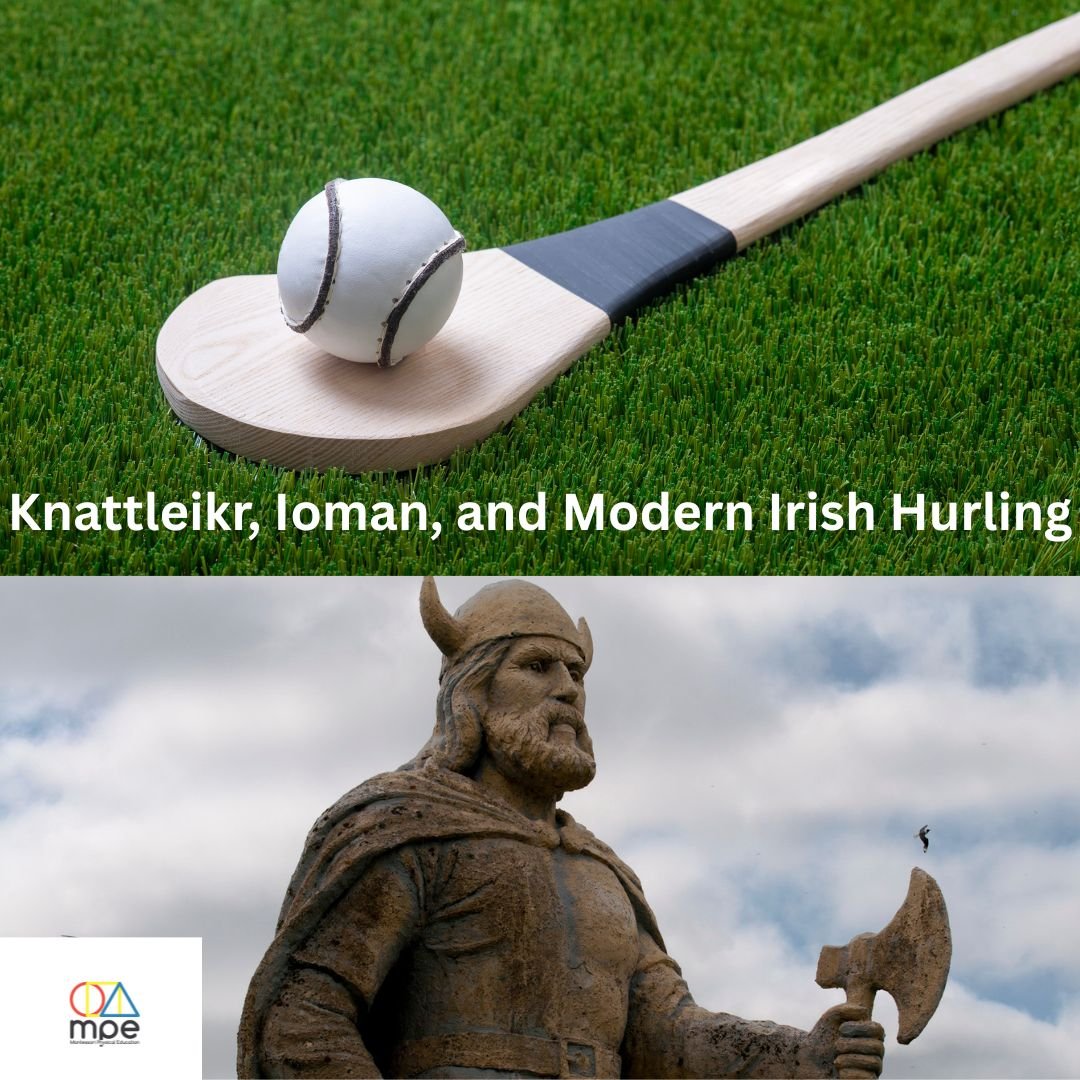
Viking Knattleikr, Ioman, and modern Irish Hurling
A while ago, I watched a brutal movie called The Norseman. It followed the journey of a Viking who went from prince to slave, ultimately to confront his father's killer in an epic final showdown. The movie did not hold back on the blood and gore, but it also seemed to do its research on Viking life. Of course, there were exaggerations, but a lot of the movie was grounded in historical accounts. One aspect that caught my attention most was their depiction of an ancient stick-and-ball game called Knattleikr.
In the scene, the protagonist is thrust into a game between two teams, and the rules and objectives are initially unclear to him. The ball is put into play, and the participants begin fighting and wrestling. The game was ultraviolent, almost like two teams fighting with sticks. However, as the game progresses, the main adversary from the opposing team picks up the ball and strikes it against a wooden pole, which draws a triumphant yell from their team. This is when our protagonist realizes that hitting the pole with the ball counts as a "score," and he proceeds to play the game viciously. On the next play, he hits an opponent with his stick, picks up the ball, and tosses it to a teammate before getting shoulder rammed.
His teammate balances the ball on his stick and runs towards the wooden pole to score. This specific part of the scene was a lightbulb moment for me. I have seen that type of gameplay before, but it took a bit of investigation to find that it matched how an Irish hurling player might advance the ball. There are many rules in Irish hurling, but specifically, if a player runs with the ball for more than 4 steps, the ball must be balanced or juggled off their stick. This similarity was striking enough to make me wonder whether there was a connection between Knattleikr and Irish hurling, given how similar the feature is.
There was indeed cultural exchange between the Vikings and the Irish, specifically during the 8th to 11th centuries. This period was marked by Viking raids and settlements in Dublin, Wexford, and Limerick, leading to significant cultural mingling between the two cultures. Further evidence comes from several Irish annals, including those from Ulster and the Four Masters. The Annals of Ulster describe an ambush on the Norse Dubliners during an Irish ball game called Iomán (more on that later). A similar account in the Annals of the Four Masters describes Norse Dubliners being ambushed during a public ball game during a festival. Other annals describe how the Irish and Norse frequently intermarried, shared languages, and participated in shared festivals.
Interestingly, there are also similar story arcs mentioned between Knattleikr and Iomán in their respective ancient texts. There are several Viking sagas (Grettir the Strong and Egil Skallagrímsson) that mention Knattleikr, and both feature young heroes who get into (deadly) fights with their opponents, suggesting the seriousness of the outcome of these games. In the Egils saga Skallagrímssonar, players who entered the game understood the risks of this intentionally violent game. Quitting or refusing to play could tarnish one's standing in society, but also not knowing when to quit could prove fatal. If someone was killed, it was framed as a consequence of the game or, sometimes, as the result of a personal rivalry. In either understanding, it is not considered the “game’s fault.” Participating in Knattleikr meant knowingly accepting the risk of serious injury or death, and such outcomes were viewed as an individual’s fate rather than a failure of the game or community. Unlike today's regulated sports, where safety is prioritized, these ancient contests doubled as tests of honor and personal valor, much as duels once did. This stark difference in expectations and values helps explain why the lethal outcomes described in the sagas were not seen as unusual or wrong by their societies.
These sagas share similarities with Irish mythology, particularly the story of Cú Chulainn, one of its most important figures. Cú Chulainn, the epitome of bravery and tragedy, was described as a youth playing Ioman, so skilled that he defeated an entire team. In early Irish texts, such as The Cattle Raid of Cooley and The Boyhood Accounts of Cú Chulainn, accounts of his skill include his ability to strike the ball, be fast enough to catch his own hit, and balance the ball on his stick while running past defenders. Similar to Egil, when Cú Chulainn is denied a turn during the game, he flies into a rage and attacks the other boys. Both sets of stories feature aggression in their respective games and also feature young heroes giving in to their anger.
Besides resembling the mythology surrounding their heroes, the Viking game Knattleikr (translated as "ball game") and the Irish Ioman (meaning "to drive or strike") may have shared similar rule sets. Both were team ball-and-stick games played in public, using physical contact to gain control of the ball. Just as modern hurling scores by sending the ball between two posts, Knattleikr required players to hit a single post to score, serving the identical purpose. Both games were held outdoors on open grasslands, though Knattleikr is also explicitly mentioned as being played on ice, much like how today's sports can be played in different environments. The use of a stick for controlling and advancing a ball links all three: ancient Knattleikr, Ioman, and modern hurling. In each, the field served as an open arena for strategy and physicality. Both games were integral to warrior training and served as a rite of passage.
By most experts, Ioman is considered the direct ancestor of modern Irish hurling. Even the modern Irish word for hurling is Iománaíocht, making Ioman an older name for the game. The playing stick was called a camán, and the ball was called a liathróid (now called a Sliotar), and the camán was the only thing allowed to touch the liathróid, meaning no hands! The ball could be carried only if it was balanced on the camán. While rough play was part of the game, around 1100 AD, the Brehon law was reflected in various legal texts that defined the level of violence permitted and the penalties for exceeding it. The Brehon law, a significant legal system in early Irish society, was used to determine compensation for the injured party when a player was deemed too aggressive (probably for striking the head with the camán).
So, what is the actual connection between Knattleikr and Irish hurling? The short answer is the game Ioman, but Knattleikr and Ioman evolved in parallel. Knattleikr is no longer played (except by reenactors at festivals or Viking games), but Ioman is played today in its most recent form as Irish hurling. However, I believe Knattleikr lives on in Irish hurling. In Ioman, using the hand was strictly forbidden, but in the movie clip, we saw that picking up the ball to strike it was allowed in Knattleikr. Modern Irish hurling also allows the ball to be handled by the hand in specific gameplay scenarios. I believe modern hurling's use of the hands comes from the sport of Knattleikr. Because later versions of Ioman likely borrowed this gameplay feature from Knattleikr, they had to define their game to distinguish it from Knattleikr. As Knattleikr's popularity dwindled, regional stick-and-ball games inspired by Ioman evolved into modern hurling in the 1600s. In 1884, the Gaelic Athletic Association (GAA) was founded, and Irish Curling was properly codified. In conclusion, Knattleikr likely contributed to the development of modern Irish hurling by allowing the use of hands, which was previously not permitted in hurling’s ancestor sport, Ioman.
Materials:
· A large play area (gym or outside)
· A pickleball racquet per student
· At least two pickleballs or tennis balls
o One per student is ideal.
· Jerseys or pinnies to distinguish teams (if needed)
· Two stationary targets (trees, garbage cans, basketball hoops, etc.) or two mini or full-size soccer nets
o If you prefer to hold two small-sided games simultaneously, then you will need four in total.
Number of Students: This game could work with two-on-two, but three-on-three seems to be the sweet spot. If you have more than six students playing, making small-sided games with your available space is the best. If you have more than sixteen students playing, unless you have a giant gym, it may have to be played outside.
Prior Knowledge: The students could be studying Medieval Europe, but this is also just fun to play because it is a traditional indigenous game.