
In Part 1, we exposed the multi-billion-dollar corporate agenda aimed at monetizing youth sports. In Part 2, we confronted the steep biological tax of early hyper-specialization, which includes early joint fusions, structural asymmetries, and psychological burnout.
However, pointing out a broken system is only half the battle. It’s fine to point out problems, but only if you have solutions. We have to show parents, coaches, and athletic directors that protecting a child's health doesn't mean sacrificing their athletic dreams. In fact, biology proves that the path to elite athletic performance requires the exact opposite of what the travel-ball complex is selling.
To build an unassailable, high-performance athlete, we have to look past modern industrial factories and return to our legacy of agricultural wisdom. We need to start treating our children's developing bodies not like machines to be run into the ground, but like fields to be rotated.
The Wisdom of the Soil: Crop Rotation vs. Soil Depletion
For thousands of years, farmers have understood a fundamental law of nature: if you plant the exact same crop in the exact same plot of land season after season, year after year, you destroy the soil.
A single crop, for example, corn, can relentlessly siphon the exact same nutrients from the same depth of earth. Eventually, the soil becomes completely depleted, leaving it barren, dust-ridden, and highly susceptible to disease and pests. To keep the field producing, the industrial farmer has to pump it full of synthetic fertilizers and harsh chemical pesticides. It is a fragile, artificial life-support system.
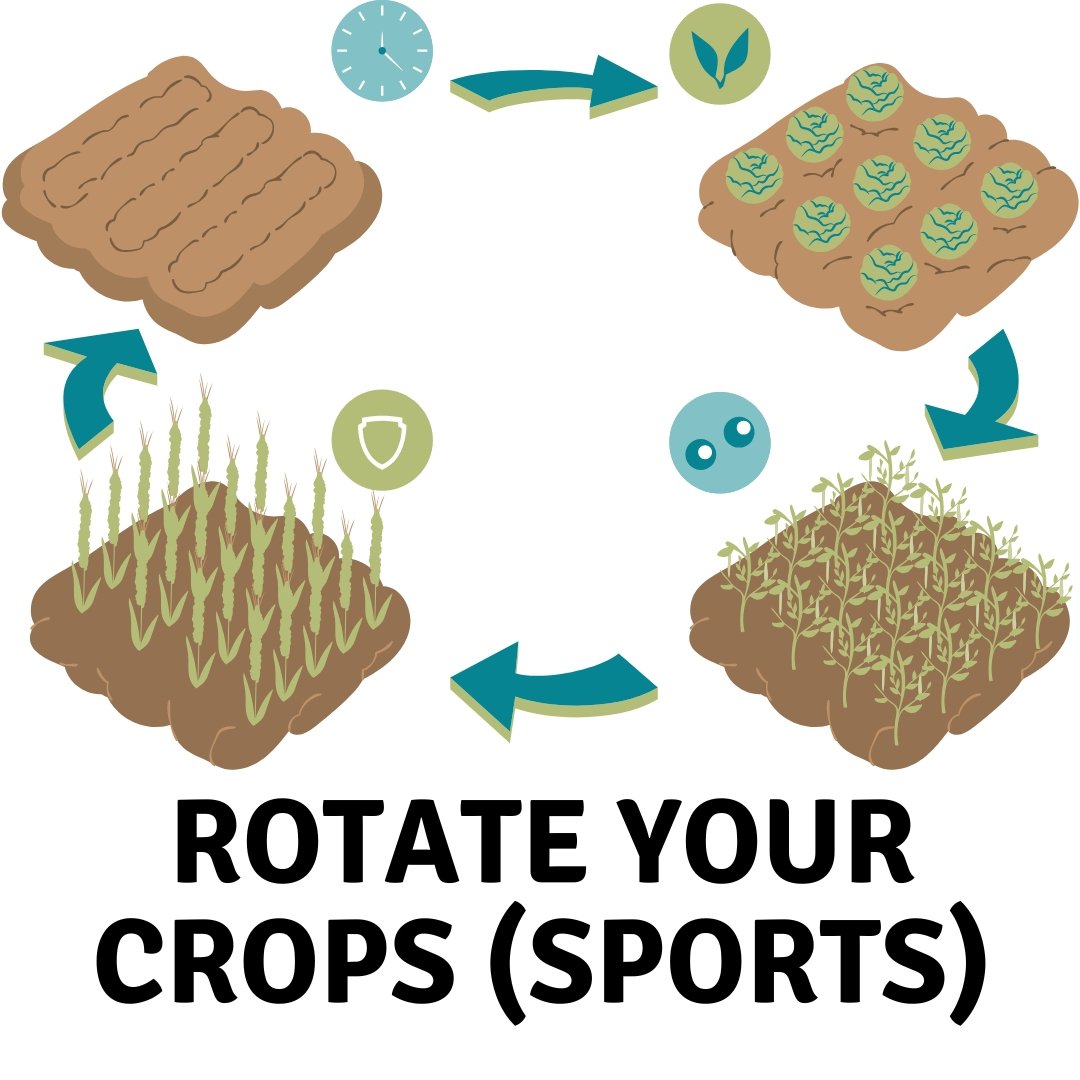
To prevent this, traditional agriculture relies on crop rotation: planting nitrogen-depleting crops one season, nitrogen-fixing plants the next, and deep-rooted cover crops the third. This simple rotation replenishes the soil's chemistry, alters the physical depth of root systems to break up clay, and naturally starves out pests that require a specific host to survive.
When we force a child to play one sport year-round, we are committing athletic monoculture. We are planting "soccer" or "baseball" in their developing musculoskeletal system 365 days a year. We relentlessly deplete the same joint tissues, overload the same growth plates, and exhaust the same muscle groups.
Like the industrial farmer, the travel-ball machine tries to bypass this biological exhaustion with synthetic fixes such as painkillers, specialized physical therapy, custom knee braces, and, eventually, orthopedic surgery. But if we treat athletic seasons like crops, we unlock the human body's natural regenerative power.
When you rotate athletic seasons, you are not simply giving a child "time off." You are engaging in active, physical restoration. By shifting the body's mechanical loading throughout the calendar, you allow fatigued tissues to recover while building a more robust athletic foundation. By changing the sport every few months, you distribute physical wear, build a balanced kinetic chain, and disrupt the cumulative mechanical stress of overuse before it can trigger chronic inflammation or premature growth-plate fusion.
The Neurological Engine: Athletic Multilingualism
The physical benefits of athletic crop rotation are obvious, but the neurological benefits could be where true elite potential is unlocked. Early specialization assumes that to be great at a skill, you must repeat it endlessly. But neuroscience has revealed that the human brain does not learn movement patterns in a vacuum. It builds a comprehensive map of movement. When a child specializes early, they develop isolated physical literacy. They learn the precise motor program for a tennis serve or a pitching motion, but their brain struggles to adapt to unexpected balance disruptions, rapid spatial shifts, or chaotic environments. They are athletically monolingual.
Multi-sport athletes, on the other hand, build athletic multilingualism.
Every time a child learns a new sport, their central nervous system must solve new motor problems. A youth soccer player learns how to track a bouncing object with their feet while navigating a crowded field; a basketball player learns to track a ball with their hands while maintaining vertical balance. Both players use similar tactics to get the ball to the goal, using passing and cutting.
When these diverse neural pathways intersect, they create a massive motor reserve. Because their brain has solved a wide array of physical problems, the multi-sport athlete possesses superior spatial awareness, faster reaction times, and highly adaptable coordination. When they return to their primary sport, they don't just play better; they learn new, complex skills at a rate that hyper-specialized kids simply cannot match.
Overcoming the Practical Roadblocks
Understanding the biology of rotation is simple; implementing it amidst real-world pressures is where things get complicated. The first hurdle is often the state of school athletic programs themselves. Many parents flee to the travel circuit because their local school sports environment feels disorganized, poorly funded, or entirely dependent on well-meaning parent volunteers who lack technical training. However, if you have the sports expertise to spot these glaring gaps, it means you have knowledge that needs to be shared. Instead of taking your child out of the school system and handing your weekends over to a private corporate club, get involved.
We need to rebuild the athletic village. If you have the background, step up to coach. If your schedule doesn't allow for a full coaching commitment, you can still elevate the standard. Take the school coach out for a beer, have a constructive chat, and share a few tactical concepts or high-quality practice drills that could pay off big for the whole roster. When parents with real sports expertise actively participate and offer constructive support, every kid in the community wins.
This community participation is also the direct antidote to the favoritism that often plagues high school sports. Parents frequently worry that if their child steps off the private treadmill, school coaches will favor the kids who stay on year-round club rosters. This nepotism and club bias absolutely poison school tryouts. But fleeing the school system entirely only feeds the very private leagues causing the problem.
As parents, booster clubs, and community members, we have a collective voice in holding our local school athletic departments accountable. We must actively participate to ensure a transparent athletic culture rooted in meritocracy rather than nepotism. When we engage directly with athletic directors and school administrations to support objective, skill-based evaluations, we help strip away the artificial prestige of the "travel ball card." A kid who works hard and demonstrates superior athleticism with the right attitude deserves the starting spot. Period.
Finally, we must address the child's passion. When a young athlete insists they only want to play their favorite sport year-round, our job as parents and educators is to be the adults in the room and reframe their training. Instead of telling your child they "can't" play their favorite sport, explain to them how doing other things will actually make them much better at their chosen sport.
We need to actively connect the dots for them:
Tell your basketball player: "We are doing cross-country this fall, not to turn you into a runner, but because it builds the elite aerobic endurance you need to dominate the court in the fourth quarter when everyone else is exhausted. So many mistakes in basketball happen because of fatigue, so by removing the fatigue component, you are immediately making yourself better for next season. Then, after the basketball season, you need to do volleyball because there are so many crossover skills between the two. Also, you may never be able to dunk in your lifetime, but getting a spike through a block has that same feeling.
By framing seasonal rotation as a strategic training tool for their primary passion, you protect their growth plates from the physics of training while actively fueling their competitive drive.
The Intuition Gap: What Scouts are Warning Us About
This cross-pollinated training directly solves a major complaint currently echoing through the coaching ranks. Talk to scouts and recruiters at every level of play, and they will all tell you the same thing: today’s youth athletes are stronger, faster, and more physically imposing than ever before, but there are fewer actual "ball players" on the field.
We are producing hyper-tuned physical specimens who completely lack game IQ. They can run a blazing 40-yard dash or throw at high velocity, but they do not understand the flow, the nuances, or the unstructured chaos of a live game. This deep, intuitive understanding of sport does not come from running the exact same drills 52 weeks a year. It comes from using the comprehensive bank of motor movements and rules they have learned to understand “total sport.” The child who has learned to read passing lanes in basketball, anticipate space in soccer, and understand leverage on a wrestling mat develops a universal athletic IQ.
When they apply this rich cognitive library to their primary athletic focus, they navigate chaotic in-game scenarios with a level of instinct, creativity, and poise that a hyper-specialized athlete trained only to respond to highly predictable, isolated prompts simply cannot replicate.
The Proof in the Draft
If the corporate travel-ball machine was correct that year-round specialization was truly the golden ticket to elite collegiate and professional success, then professional draft boards would be dominated by single-sport prodigies. But the actual data from the highest levels of sport completely demolishes this myth.
Every single year, Tracking Football analyzes the high school athletic backgrounds of players drafted into the NFL. The results are staggeringly consistent: between 85% and 90% of all NFL draft picks were multi-sport athletes in high school. In last year’s draft, out of 257 players selected, over 88% played at least two sports, with many participating in track and field, basketball, or wrestling alongside football.
Major League Baseball front offices have begun tracking "specialization history" as a risk metric. Organizations like the Houston Astros and the Los Angeles Dodgers actively look for prospects who played multiple sports in high school, knowing they possess cleaner medical histories, a higher biological ceiling for development, and a dramatically lower risk of Tommy John surgery. The highest-performing athletic organizations in the world do not want the pre-packaged, worn-out travel-ball product. They want the rich, fertile, rotated soil of the multi-sport athlete.
Reclaiming Our School Sports Culture
Now, let me be entirely transparent: I am biased. As a school athletic director, I have skin in this game. Obviously, I want the highest possible participation rates in our school's athletic programs.
But my bias aligns perfectly with biology. School-based athletic departments are uniquely structured to be the natural antidote to the travel-ball grinder. Unlike the corporate travel matrix, which demands year-round, single-sport commitment to justify its price tag, school sports naturally follow the agricultural crop rotation theory. We offer distinctly different sports across defined fall, winter, and spring seasons, working in harmony with the academic calendar and the changing seasons. This natural rotation is the ultimate selling point that every school athletic director and physical educator should champion.
We need to encourage parents to reinvest in school sports because our seasonal structure naturally teaches athletic versatility while actively protecting their children from systemic wear-and-tear. At the same time, school administrators should celebrate this model: school pride, student engagement, and campus culture thrive when more kids participate across multiple sports rather than specializing in isolation.
Most importantly, our children get to keep playing alongside their classmates, representing their community, and cementing the lifelong friendships and memories that can only be forged in the fire of school sports. Let’s shut down the year-round industrial grinder, restore variety to our playing fields, and give our children back a healthy, joyful, and sustainable athletic childhood.