
Friendly disclaimer:
This blog post is not intended for the very experienced PE teacher.
If you’ve been teaching PE since the Presidential Fitness Test was cool, you are welcome—encouraged, even—to skip this post while nodding smugly and saying, “Yes, obviously.”
This one is for our new PE teachers or classroom teachers who must do their own co-curriculars, and anyone who has ever thought, “Why are only four kids touching the ball?”
A Lesson It Took Me Years to Learn
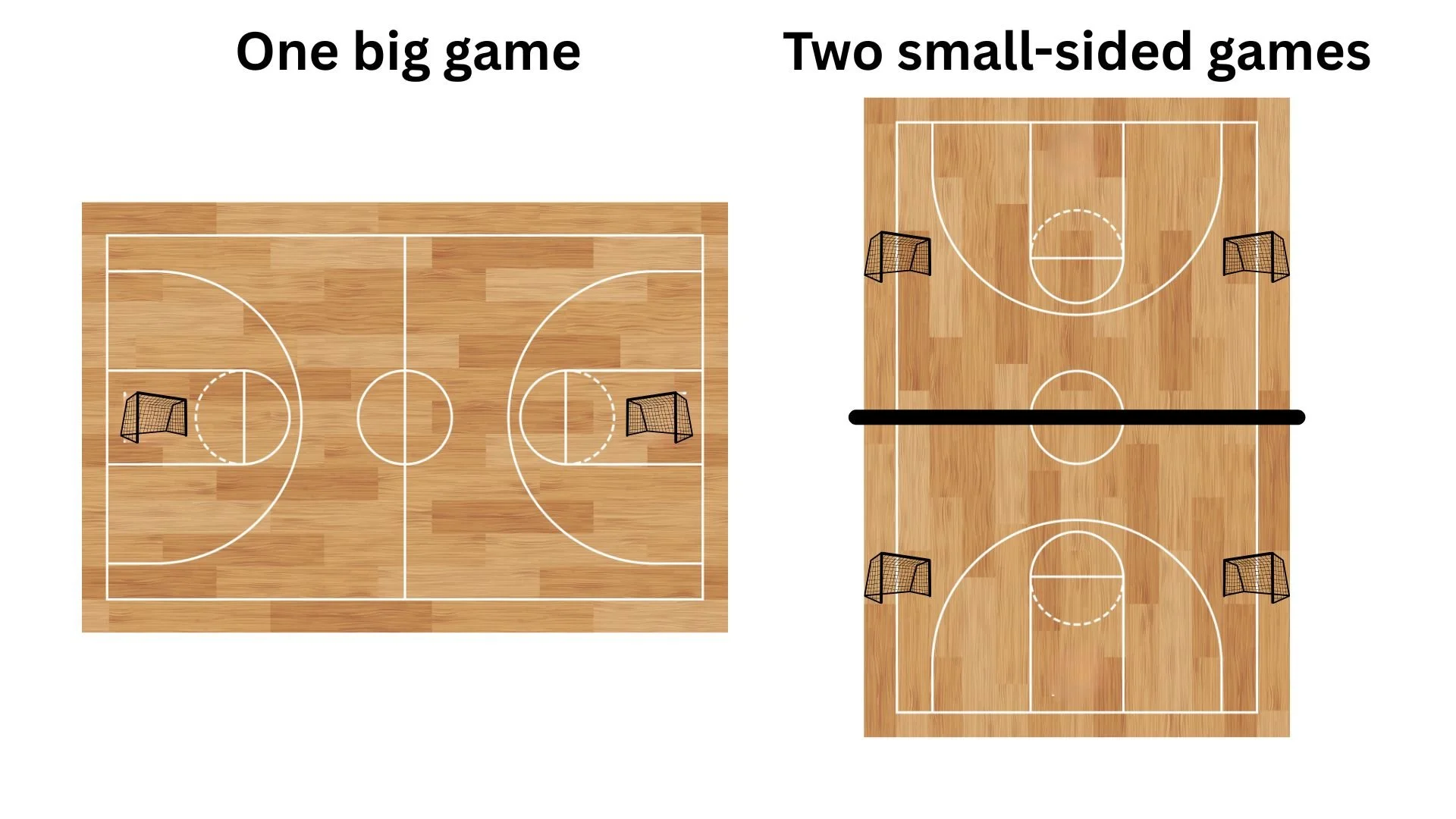
When I first started as a PE teacher, our school population was much smaller. Classes were small enough that facilitating whole-class games felt manageable. We could play one big game, one big field, two big teams, and on the surface, things looked great.
The kids were having fun.
The game was moving.
Everyone seemed involved.
But over time, I noticed something that started to bother me.
Whenever we played a game that involved more complex or “sporty” skills—even with practice beforehand—a few kids consistently dominated the game. At the same time, some students barely participated at all.
That led me into a classic chicken-or-the-egg dilemma:
Were some students being left out?
Were they less interested?
Were they distracted?
Or were they quietly deciding the game just wasn’t for them?
Usually, the answer was all of the above.
And the result was always the same: Less participation than I wanted, especially from students who needed PE the most.
The Reality We Have to Acknowledge
Anytime we play a traditional sports-based game, students who play that sport outside of school have a huge advantage.
And that gap only widens as children get older.
It’s not uncommon for a dedicated basketball player, for example, to be on three or four teams a year, practicing multiple times a week. There is simply no amount of PE class that can bridge that gap.
And that’s okay.
PE is not meant to compete with club sports.
It’s meant to give every child access, confidence, and competence.
Once I accepted that reality, everything changed.
The Revelation (That Veteran PE Teachers have known for years)
If you’re an experienced PE teacher, you are probably screaming right now:
“SMALL-SIDED GAMES!”
Yes. Exactly.
It took me years to fully understand how powerful they are—which is why I’m writing this now, so it doesn’t take you years too.
Dividing your playing space and creating multiple small-sided games is one of the most effective tools we have for increasing participation across a wide range of skill levels.
What Is a Small-Sided Game?
Instead of:
One large playing area
Two goals
Two big teams
Try this:
Divide the playing area in half
Add two goals per side
Create four smaller teams
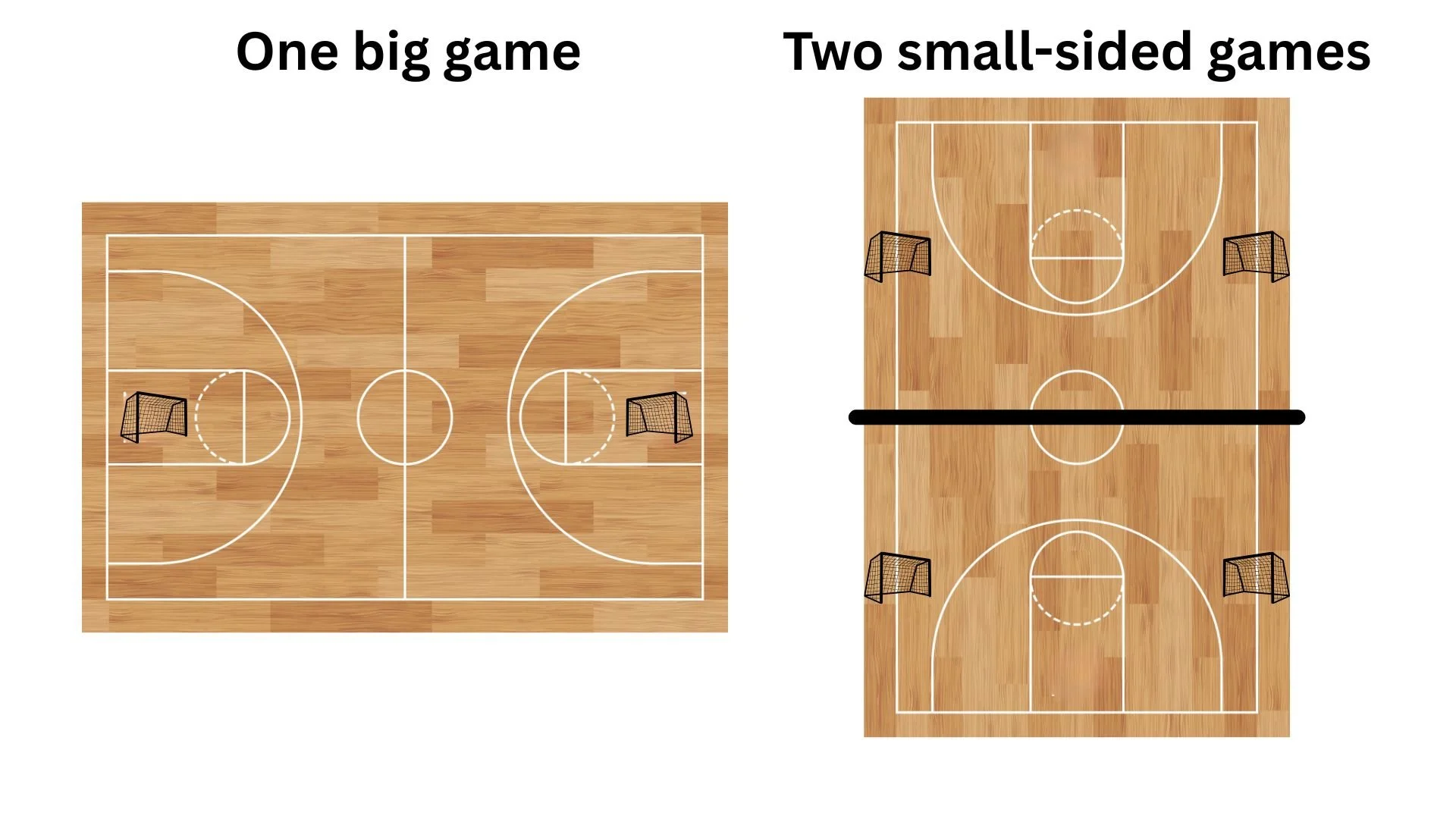
If each team originally had ten players, they now have five.
Pause and think about that for a moment.
That’s double the opportunity for touches, decisions, movement, and engagement for every student.
Why This Works (Especially in Montessori PE)
Small-sided games:
Increase choice and agency
Encourage independence
Create space for self-correction
Reduce reliance on the adult as the sole authority
You can also be intentional with team composition:
Put more experienced players together on one side
Create a more novice-friendly game on the other hand
Or distribute skilled players across teams with the expectation that they lead, encourage, and model sportsmanship
Suddenly, students who were never “the best” get a chance to lead.
Students who were hesitant feel safer trying.
And students who usually dominate learn restraint, awareness, and responsibility.
The Very Real Challenges (Let’s Be Honest)
Small-sided games are not magic. They come with trade-offs.
Challenge #1: You can’t see everything.
With multiple games happening at once, your attention is divided. If you’re addressing a conflict in one group, something might be happening in another group that you miss.
If you have more than one teacher — excellent.
If you’re solo—welcome to real PE teaching.
Here’s the silver lining: this is the perfect opportunity to shift responsibility to the students.
Tell them plainly:
“Because my attention is divided, you will need to help officiate your own games and solve small problems together.”
You might be surprised how capable they are.
If you’ve read my blog before, you know what comes next. Anchor your PE program in sportsmanship. For younger students, we use the mantra: “Be fun to play with. Be fun to play against.” That single phrase does a lot of heavy lifting.
Challenge #2: You need more equipment.
This is a legitimate concern, especially if you’re working with a limited budget.
More games = more balls, goals, cones, pinnies.
But equipment lasts much longer when students are taught how to use it respectfully. And you can build your inventory over time. The increase in participation and skill development is well worth the investment.
The Payoff Is Immediate—and Long-Term
The first thing you’ll notice when you switch to small-sided games is simple:
More kids are participating.
The second thing you’ll notice over the long term:
More kids are getting better.
Skill development compounds when students get more touches, more chances, and more meaningful involvement. Confidence grows. And an excellent side effect is that more students begin to see themselves as capable of joining your school’s athletic programs.
Where to Start
If you’re new to this approach, start small:
Try it with your oldest students, who can articulate problems and handle responsibility
Or start with your youngest, building a foundation you can return to year after year
Both approaches work. What matters most is that you try.
Final Thoughts
I recently updated the lesson plan “Pato,” the Argentine national sport we play on scooters in PE, by adding these small-sided suggestions.
If you haven’t experimented with small-sided games yet, I strongly encourage you to give them a shot. You may find—as I did—that this one structural change transforms not just how your games look, but who your PE program truly serves.
And if you’re a veteran teacher who skipped to the end just to confirm you were right all along—yes, you were.