
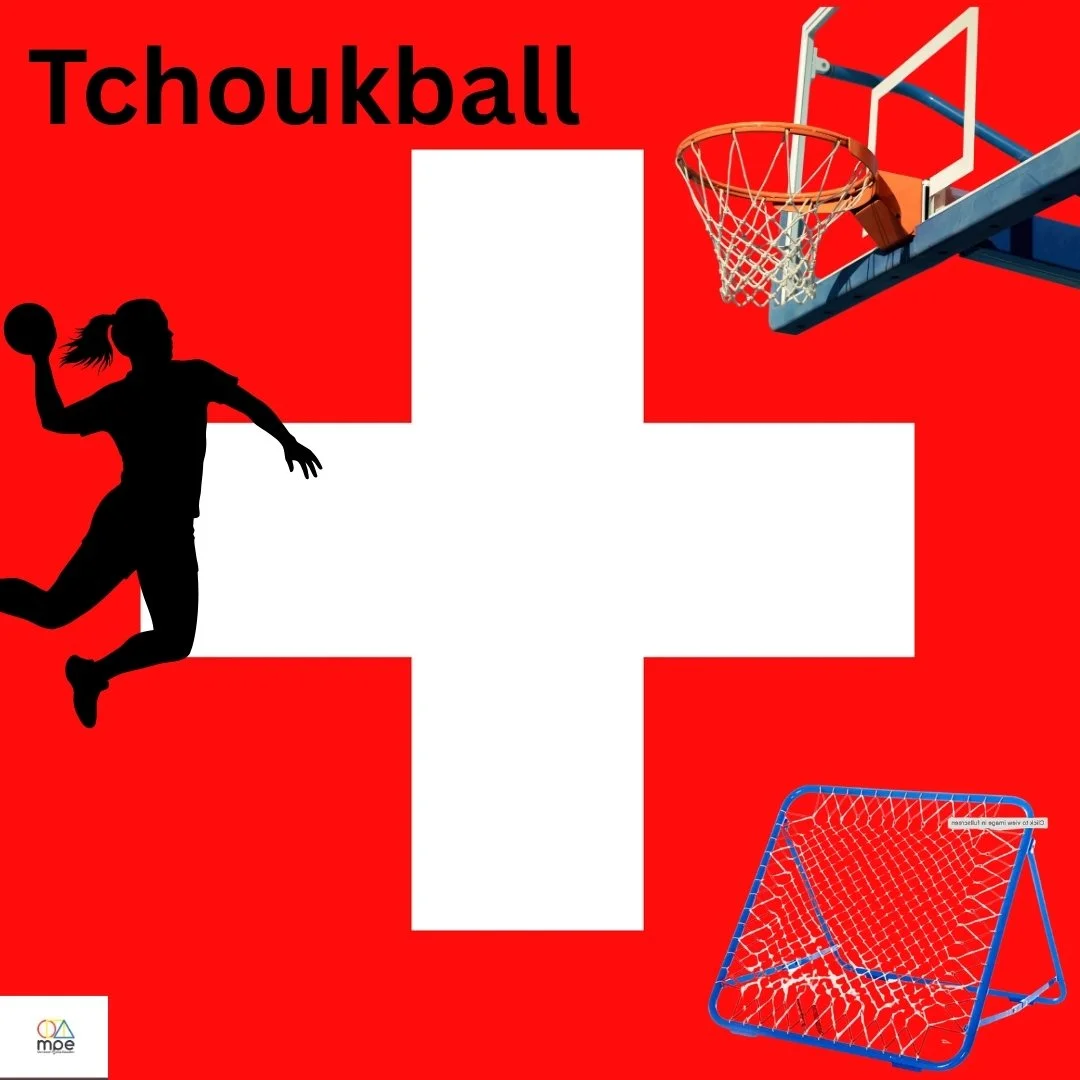
In the United States, most people have never heard of Tchoukball. Fewer can pronounce the name correctly. Before you feel too culturally insensitive, don't worry. The word isn't another language. It is actually an onomatopoeia for the sound the ball makes when it bounces off the specialized rebounder used in the sport.
Tchouk!
So where did Tchoukball come from?
A Sport Designed for People, Not Just Athletes
Tchoukball was invented by Swiss biologist and physician Dr. Hermann Brandt, who was from Geneva. As a physician and sports scientist particularly interested in sports medicine, Brandt was concerned about the number of injuries associated with traditional sports. He was especially interested in the physicality that many sports demanded and the unnatural movements and collisions that could result.
Brandt explored these ideas in his book From Physical Education to Sport through Biology and later distilled many of his criticisms into his influential paper Scientific Criticisms of Team Sport, which won the Thulin Award. But Brandt's criticism of traditional sport went deeper than injuries. He questioned the educational purpose of sport itself. Should physical education simply be about producing champions?
Brandt didn't think so. He believed physical education should help develop the whole person and contribute to a healthier society.
He wrote:
“A man/woman's personality is of worthy nature only if his psychological and social behavior is meritorious…”
That idea resonates with me. I believe sport is more than a physical game. It can teach us about cooperation, empathy, decision-making, communication, perseverance, and how we interact with the people around us. That's exactly what makes Tchoukball so interesting.
Brandt wanted to create a sport that borrowed some of the most interesting elements of popular sports while removing what made those sports inaccessible or unnecessarily dangerous. Tchoukball combines ideas from handball, volleyball, and squash into an invasion-style team game. But there is one major difference: the defense doesn't defend the person with the ball. No tackling, body checking, blocking the shooter, or stealing the ball from an opponent. Instead, defenders position themselves to catch the rebound.
That changes everything. The offense has to think about where they shoot and how they create space. The defense has to read the shot angle, anticipate where the ball will rebound, and work together to make the catch. Instead of physically stopping your opponent, you have to outthink them. And once you catch the rebound? You're immediately on offense.
Why PE Teachers Should Care About Tchoukball
The basic skills aren't particularly intimidating: throw. Catch. Move. Jump. Read the rebound. Most PE teachers can introduce those skills quickly. But as students improve, the tactical possibilities become increasingly sophisticated. Players begin thinking about angles. They communicate with teammates. They anticipate rebounds. They recognize space. They make decisions under pressure. And because there is no physical defense, students who might struggle in traditional invasion games can suddenly become important contributors. That makes Tchoukball particularly interesting for physical education. It was intentionally designed to be accessible.
And that brings us to my version.
American Tchoukball
There is just one problem with teaching traditional Tchoukball in many American schools:
The nets.
Traditional Tchoukball uses specialized rebounders. They aren't particularly difficult to find, and they aren't necessarily prohibitively expensive, but they aren't exactly standard equipment in most American school gyms. Basketball hoops, on the other hand? Those are everywhere.
The idea for American Tchoukball actually came from something I see almost every day at school. Whenever we have recess in the gym, the students who love basketball inevitably start taking half-court shots. And, as you can probably imagine, 99% of them miss. Usually, that's harmless. But I'm constantly making the calculation: Do I let them keep shooting, or do I shut this down because that basketball is going to ricochet across the gym and eventually hit someone who isn't paying attention?
I've watched probably a million of these half-court shots over the years. Maybe they had been quietly working their way into my subconscious. So when I first started reading about Tchoukball, I immediately wanted to try it with my students. The idea of throwing a ball at a rebounder, anticipating the ricochet, and having the other team try to catch it sounded like a fantastic PE game. There was just one problem.
I had nowhere to put the nets.
Our PE equipment storage is already packed, and adding a couple of specialized Tchoukball rebounders wasn't exactly practical. But the more I thought about the game, the more I kept coming back to those half-court shots. I'd spent years watching students launch basketballs toward the basket and backboard, watching the ball ricochet in predictable directions. What if, instead of putting a Tchoukball net on the floor, I elevated the target and used the backboards we already had?
That was the beginning of American Tchoukball. The adaptation was born out of necessity, but it also solved another problem. Tchoukball is designed to be a non-contact sport, so it seemed counterproductive to introduce the game with a ball that could become a pretty dangerous projectile in a crowded gym.
So we switched to a volleyball.
A volleyball still has plenty of bounce to create the ricochets that make Tchoukball so much fun, but it is significantly lighter than a basketball. That makes the game much more manageable in a school gym, especially when students move around the court and aren't directly involved in the play.
How to Teach American Tchoukball
The great thing about this adaptation is that you don't need much.
Materials
Large playing area
Two basketball hoops facing each other
Volleyball
Basketball court markings
If you have traditional Tchoukball rebounders, you can absolutely use them. They just aren't necessary for this version.
The basketball court itself gives us another advantage. We can use the paint as our forbidden zone.
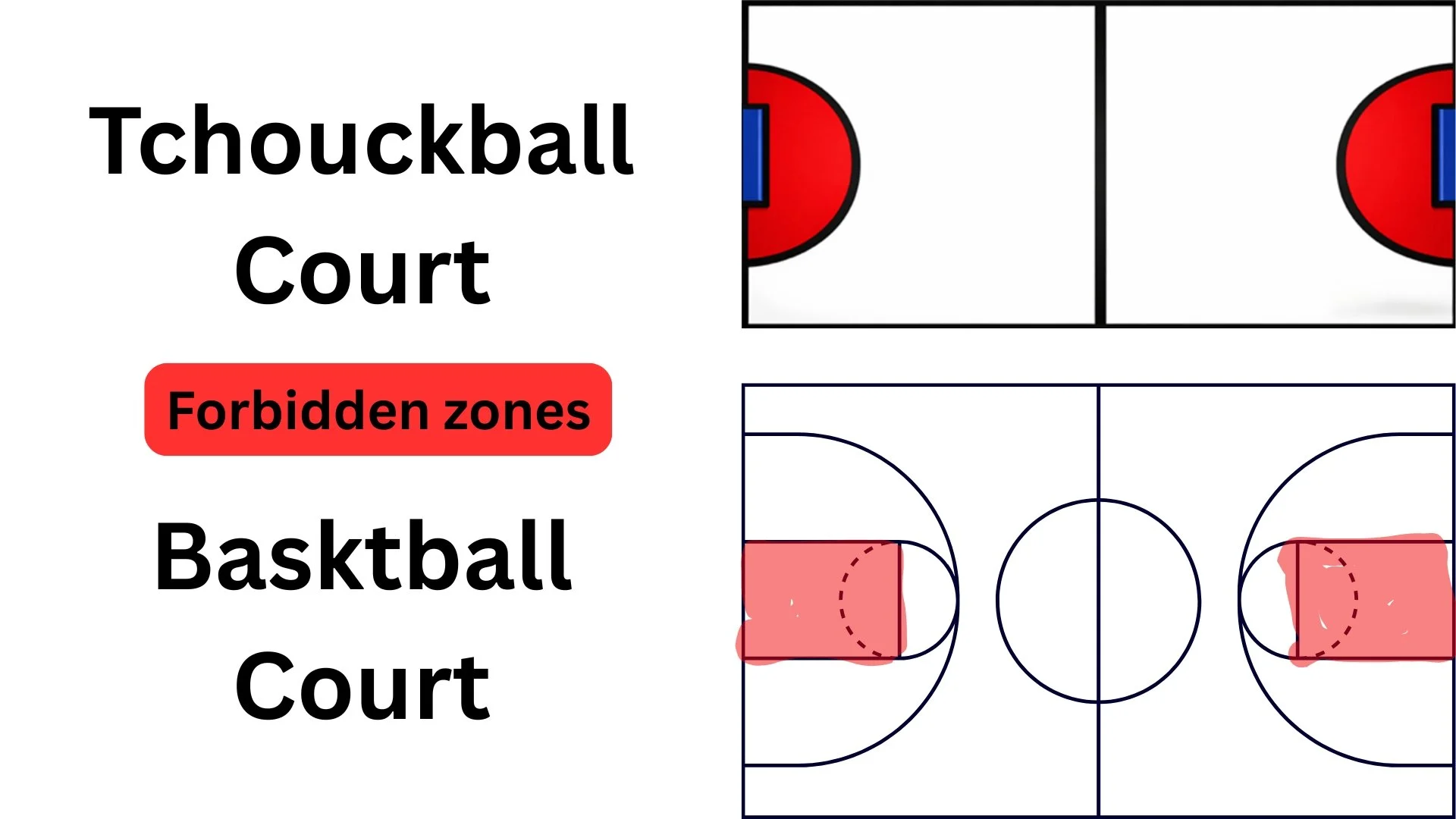
Traditional Tchoukball vs. American Tchoukball: The forbidden zone surrounding the rebounder becomes the basketball paint.
The concept stays the same, but instead of adding another piece of equipment, we're using lines that are already on the floor.
Connecting It to the Classroom
Tchoukball gives you several opportunities for interdisciplinary connections. If students are studying Europe, you can introduce the sport through its Swiss origins. It can also connect naturally to peace education. In Tchoukball, the defense isn't trying to hurt, intimidate, or physically stop the other team. Players have to coexist in the same space while constantly reading and responding to one another. That creates an interesting conversation about competition. Can you compete intensely without trying to physically dominate another person? Tchoukball's answer is yes.
Introducing the Game
I don't recommend giving students all the rules at once. Start with the basic idea:
Throw the ball at the backboard. If the ball rebounds into the playing area, the other team tries to catch it before it hits the ground. If they catch it, they're immediately on offense. That's the game.
Once students understand that basic cycle, begin layering in the rules. Traditional Tchoukball is played with seven players per team, although you can easily adjust that based on your class size.
The paint becomes the forbidden zone. Players cannot enter the paint while playing defense or catching a rebound. Offensive players can jump into the paint to shoot, provided they release the ball before their feet touch the ground inside the forbidden zone. This creates one of the most fun parts of the game. A player can sprint toward the basket, jump, and fire the ball at the backboard before landing. For middle school students especially, some of these shots can create huge ricochets.
The Rules of Three
One of the easiest ways to remember some of the traditional Tchoukball rules is the Rule of Three:
A player can take a maximum of three steps while holding the ball.
A player can hold the ball for a maximum of three seconds.
A specific rebounder can be shot at a maximum of three consecutive times.
These rules keep the game moving and prevent one player from controlling possession indefinitely.
Scoring and the Frame
The goal is to shoot the ball off the backboard so it rebounds into the playing area and the other team cannot catch it. If the defense fails to catch a legal rebound before it hits the ground, the shooting team scores.
There are also ways for the shooting team to give the other team a point. If the ball lands in the forbidden zone, goes out of bounds, hits the shooter after rebounding, or otherwise results in an illegal shot, the other team receives the point. In the traditional game, the rebounder's outer tubing is called the frame. Hitting the frame can result in a fault or a point for the other team depending on where the ball lands.
In American Tchoukball, we simply transfer that concept to the basketball hoop. The edge of the backboard and the basketball rim become our frame.
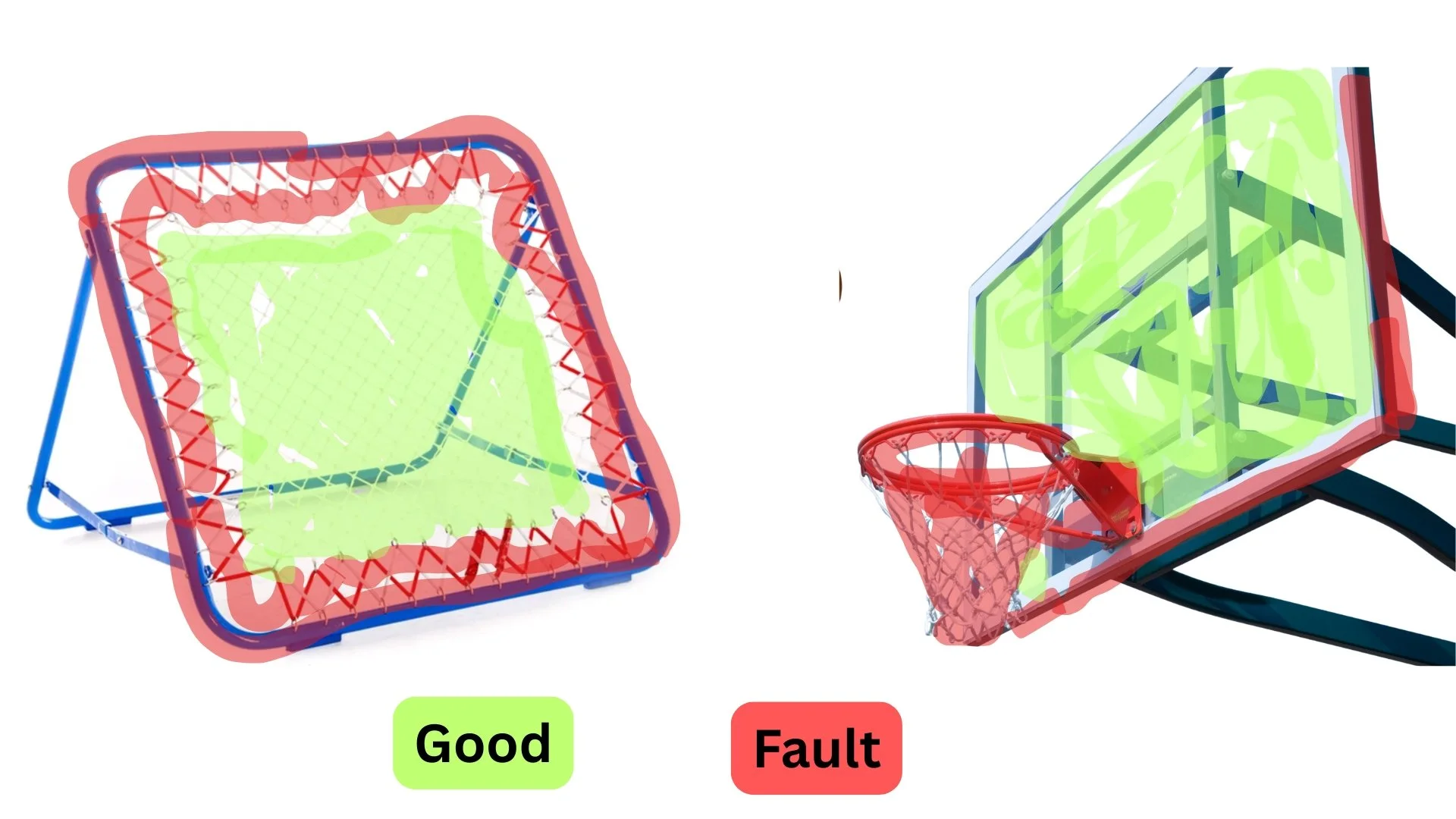
What counts as a frame? The outer tubing on the traditional rebounder becomes the edges of the backboard and the basketball rim.
If a shot hits the edge of the backboard or rim and lands in the playing area, it is a fault. If it hits the frame and lands in the forbidden zone or goes out of bounds, the other team gets the point.
Defense Is Different
This is probably the most important concept to emphasize: defense does not defend the shooter. Defenders cannot block the shot, intercept a pass, knock the ball out of someone's hands, or make contact with an offensive player. Instead, they have one job: catch the rebound. That means students have to learn to read the shot angle and position themselves accordingly. And because either team can shoot at either backboard, defenders have to constantly be aware of what is happening on both ends of the court. The result is a surprisingly dynamic game. A team can defend one second and attack the next. If an offensive player drops a pass or loses control of the ball, possession immediately changes. However, defenders cannot intentionally dislodge the ball to force a turnover.
Why I Like the American Version
I really like adapting Tchoukball this way. To be clear, I'm not claiming that this is the "correct" way to play Tchoukball. It isn't. Traditional Tchoukball has a specific piece of equipment and a specific set of rules that make it what it is. American Tchoukball is an adaptation. But I think adaptations can be valuable in physical education.
One of the biggest barriers to introducing new sports in schools is equipment. Teachers don't necessarily have the budget, storage space, or access to specialized equipment required for every sport they might want to teach. But almost every American school gym has basketball hoops. So let’s use what we already have to teach the same concepts. I guarantee that even your hardcore competitive students will still have a lot of fun playing this game. But the strength of this game is that it’s for everyone at every ability, and this is why you need to get this game in your PE rotation.