
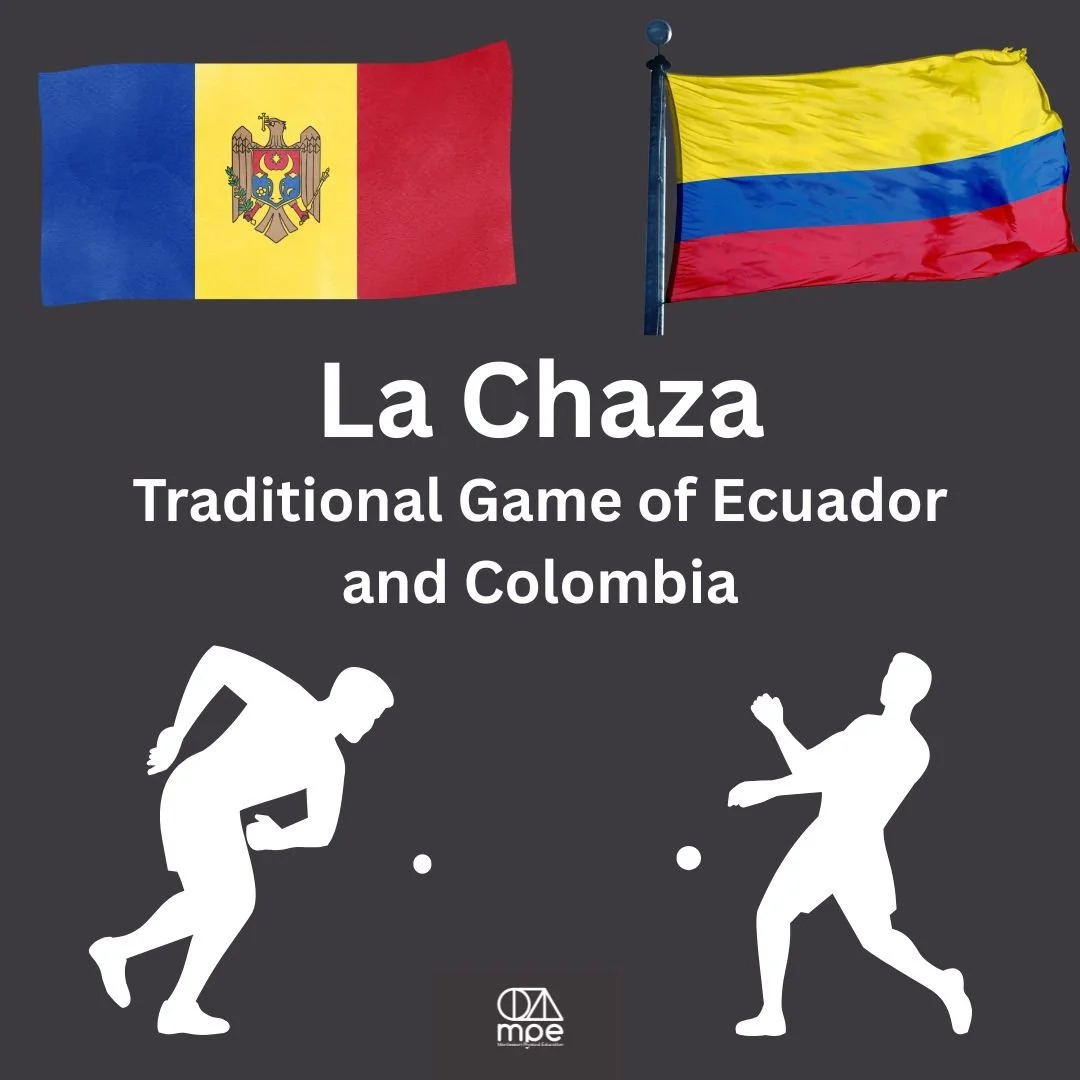
Across the mountains of southern Colombia and northern Ecuador, there is a sport that has been played for centuries but is largely unknown outside of the region. The game is called Chaza, and for many communities in the Andean region of Nariño, it represents far more than just competition. It is a cultural tradition, a social gathering, and a sport that has connected generations of players.
Chaza is widely considered an Indigenous sport originating from the Pasto people, who lived in the region that is now northern Ecuador and southern Colombia. Many historians estimate that the game has been played for at least 500 years, though its exact origins are difficult to trace. Some believe that when the Spanish conquistadors arrived in the Americas, they saw Indigenous people playing this game and later brought the idea back to Europe, where it eventually influenced tennis. However, this explanation is likely not historically accurate, since tennis is known to have developed from the French game Jeu de paume and other European handball games. A more realistic possibility is that Chaza developed locally but may have been influenced by European handball traditions that arrived during colonization, including games similar to Basque pelota, which are still played in Spain today. The truth may lie somewhere in between—an Indigenous game with its own identity, but one that evolved alongside other ball-striking traditions.
Today, the sport is sometimes called “tenis pastuso,” or “Pastuso tennis,” referring to both the region and the fact that its scoring system resembles tennis.
Historically, Chaza was played primarily by young people and farmers at the end of their workday. After finishing hours in the fields, people would gather to play, socialize, and celebrate. Even today, many players say they began playing because their parents played the game before them, making Chaza feel almost like a rite of passage within families and communities.
Matches often become community gatherings rather than just sporting contests. Families attend together, children watch and learn the game, and eventually they begin playing themselves. Large events resemble festivals and can include music, food, gambling, and social celebrations. Similar to the traditions surrounding the Mesoamerican ballgame, Chaza competitions bring communities together around a shared cultural event.
Many of the biggest championships are played in June, often aligned with religious celebrations devoted to patron saints and Jesus. The sport's cultural significance was recognized nationally when, on September 9, 2024, Chaza was officially declared Colombia's national sport. Despite this recognition, the game remains relatively niche compared to fútbol, which dominates the country’s athletic landscape. Because of this, there is currently an active movement in Colombia to establish training centers for young players to preserve and promote the tradition.
Interestingly, some players interviewed in videos about the sport claim that Chaza players do not reach their athletic prime until their forties or even later, which is unusual compared to many modern sports.
The Handball Version of Chaza
One version of Chaza is played using only the hand, similar to handball.
The ball used in this version is called a Navolato. After the ball is hit, it may only bounce once before it must be returned.
In one observed match, the game was played four-versus-four, though team sizes can vary. The ball used in the handball version of Chaza—sometimes referred to as pelota mano—is smaller than the ball used in racquet versions of the game.
A particularly interesting element of this version is the moving Chaza rule, which changes the amount of territory each team must defend during the game.
In this version, a “chaza” is a marker placed on the court that defines the dividing line between teams. A referee marks the location of the chaza, which appears to represent where a point was lost. Because points must be scored on the opponent’s side, the chaza marks the location where the defending team failed to return the ball successfully.
After the mark is placed, the teams switch sides, and the marked chaza becomes the new midline marker for the next phase of play.
This means:
One team now has less territory to defend
The other team must defend a larger space
This shifting boundary turns the game into something like a territorial battle, where the playing area can expand or contract depending on where points are scored. Few sports allow the playable area to change during a match, making this one of the most unique features of Chaza.
Because the translations in the videos were not very clear and the Spanish explanations were difficult to fully understand, the exact technical rules governing the marking system remain somewhat unclear. However, multiple videos confirmed that the chaza serves as a movable boundary marker, altering the strategic playing area.
Racket Versions of Chaza
There are also versions of the game played with rackets or paddles.
Colombian Racquet Chaza
In Colombia, one version of Chaza uses a distinctive racquet called a bomba.
The bomba is designed specifically for striking the ball and includes weighted rubber studs embedded in the striking surface. These studs are used to strike the ball forcefully and propel it across the long court.
When the ball is struck, the racquet produces a distinct drum-like sound, one of the game's recognizable sensory features.
Earlier racquets were often made from wood combined with stretched animal hide, such as goatskin or cowhide. The Colombian racquet is generally longer and lighter than some other equipment used in related games.
The court used for racquet Chaza is very long and narrow, measuring approximately:
110 meters long
10 meters wide
The game is commonly played four versus four, and the scoring system follows the same progression used in tennis:
15
30
40
game/set
Interestingly, the word “chaza” in Colombia can also refer to a street-vendor stand that sells small items like candy, gum, or cigarettes.
Pelota Nacional en Ecuador
A closely related sport played in Ecuador is called Pelota Nacional.
Pelota Nacional is estimated to date back to around the 15th century and shares many similarities with Chaza.
The court resembles a tennis court but is approximately 100 meters long and played without a net.
Teams can range from two to five players per side, and the exact team size is often negotiated before the match begins.
Examples observed include:
Two versus two
One player near the midline
One player guarding the end line
Five versus five
one server
two hitters
two midfielders
The racquet used in Pelota Nacional is called a tabla, which can weigh over 12 pounds. Because of its heavy weight, players must use large looping swings to build enough momentum to strike the ball.
Serving with such a heavy racquet would be extremely difficult, so players instead use a separate serving racquet that weighs about 8 pounds.
After the serve:
The player drops the serving racquet
Then picks up the main racquet
The main racquet has a stud that allows it to stand upright, making it easier to grab quickly after the serve.
Equipment and Historical Variations
The equipment used in these games has evolved over time.
Older racquets were often more circular in shape, while modern racquets tend to resemble oversized pickleball paddles with weighted ends.
Many modern racquets are decorated with images of family members, ancestral symbols, or national pride, turning them into personal expressions of identity. It is unclear whether decorating racquets is a recent trend or whether it has always been part of the game.
Earlier versions of the sport used a completely different striking tool that resembled a giant, solid baseball glove with metal prongs sticking out to grip or strike the ball.
These gloves were extremely heavy, sometimes weighing up to 25 pounds, and required considerable strength to control. The ball used with these gloves was made of pure rubber, which made it dense and heavy.
Players closest to the midline used the heaviest gloves, midfield players used slightly lighter ones, and players defending the back of the court used the lightest versions, though even those were still very heavy.
These older tools placed significant strain on the wrist, and precise aim was necessary to keep the ball traveling straight. Even with wooden racquets, if the ball was not struck directly in the center of the racquet face, it could hurt the player’s wrist or even break it.
Youth Participation and the Future of the Game
Even though the game is often played by adults, children frequently become involved early.
Young players sometimes begin using improvised racquets and playing with a soccer ball as their first Chaza ball before transitioning to the official equipment.
This gradual introduction helps keep the sport alive within families and communities.
Because soccer dominates the sports landscape in the region, Chaza remains a relatively small sport, but there is currently growing interest in preserving and promoting it through youth training programs.
Why Teach Chaza in Physical Education?
Introducing students to Chaza provides more than just a new game. It offers an opportunity to explore:
Indigenous sports traditions
The role of community in athletics
How games evolve across generations
How strategy emerges from unique rules like the moving Chaza boundary
In the lesson that follows, students will experience a simplified version of Chaza that captures the essential elements of the game—striking, teamwork, positioning, and territorial strategy—while learning about a sport that has connected communities in the Andes for centuries.
Bibliography:
Agencia de Prensa y Publicidad Comercial. (n.d.). El deporte Nacional de la Chaza. YouTube. https://www.youtube.com/watch?v=SHcFYC-JJMQ
Columbia, S. (n.d.). Cinco deportes y juegos Puesto 4 - Chaza. YouTube. https://www.youtube.com/watch?v=Vg_dRSWvcq4
Día a Día - Teleamazonas. (n.d.). Pelota Nacional: tradición que no muere - Día a Día - Teleamazonas. YouTube. https://www.youtube.com/watch?v=ci5KKjNJou4
Films, E. (n.d.). CHUSO Y CHAZA - DOCUMENTAL. YouTube. https://www.youtube.com/watch?v=3mdVBr1MFsU
Gomez Ceron, B. S. (n.d.). JUEGO - CHAZA DE MANO GÉNOVA - UNICESMAG. YouTube. https://www.youtube.com/watch?v=-U0V2R3Wtq8
Informa, J. (n.d.). Chaza: Un Deporte Poco Conocido. YouTube. https://www.youtube.com/watch?v=NbL74-92Dx0&t=5s
Pazífico Noticias. (n.d.). La chaza, un deportes autóctono de los nariñenses que también se juega en Cali. YouTube. https://www.youtube.com/watch?v=-Y3YGua_OiM&t=11s
Stream, G. (n.d.). PELOTA NACIONAL, el tenis andino en Ecuador. YouTube. https://www.youtube.com/watch?v=t6RCDvJ-wQU