
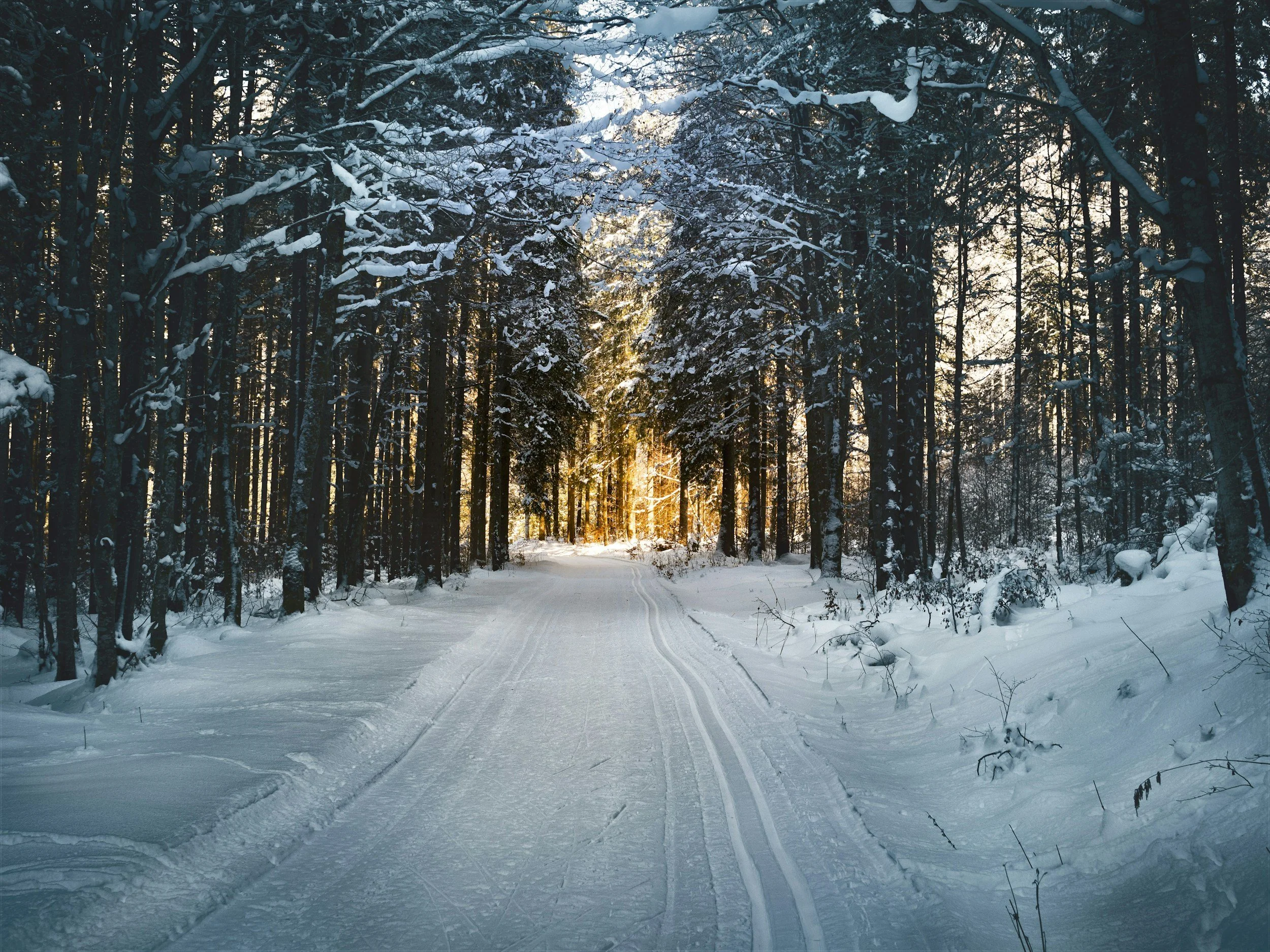
Snow Snake is a Native American game where a spear-like stick is slid as far as possible down a snowy track; the person who sends the snake the farthest wins. While the rules are simple, the game itself carries deep cultural, historical, and practical meaning. The channel size can differ a lot by tribe and game version. Some games use a narrow channel, just big enough for a golf ball, while others use a wide one for a sled. The Ho-Chunk, for example, used the narrow channel when playing their version.
Today, Snow Snake is used by modern Native American communities to reconnect with their heritage, which was often stripped away along with their land. Playing the game helps reclaim identity and tradition. Some historians believe the game may date back to the last glacial period, around 20,000 years ago. In cold climates, when hunters were using heavy spears, there may have been times when sliding a spear along the snow was more effective than throwing it, especially if a herd of deer was standing in chest-deep snow. In this way, the game reinforces techniques that were once used for hunting.
Another origin story suggests the game began as a means of communication. When the ice was too thin to walk across, people could write a message on a stick and slide it across the surface to someone far away. Without needing to shout, communication could still take place. There is also an English translation of the game's original name, “the medicine game,” which raises the question of whether it could also have been used to deliver medicine across otherwise unreachable distances.
The snow snake shows the value of craftsmanship. Traditionally, it is handmade from wood with even grain. The wood is carved into a long pole with one end shaped into a head, sometimes like a snake. The bottom half is shaved smooth and treated with a special liquid or wax to make it glide on snow. These blends are often kept secret because they give the maker an advantage. This is considered fair, since it reflects the maker’s skill. Whoever makes the best snake gets that edge.
Snakes are also decorated with symbols. This serves two purposes. It celebrates culture and identity, and it allows players to identify their own snake among others during competition. Modern snow snakes are often made from boards about an inch and a half in circumference, then smoothed and shaped. While many people now use tools like belt sanders to speed up the process, others intentionally use non-powered tools such as planers and razor edges to finish the piece. There is also a belief that a snow snake improves with age. Years of use, waxing, and varnishing make it glide more easily over time. Like a seasoned cast-iron pan, newer is not better. A much-used tool is better for the game.
This idea reflects a broader value. Time matters. From craftsmen choosing slower methods to the belief that objects improve with age, there is an understanding that rushing is not the way. This perspective carries over into life more broadly, where elders are revered, and the fast pace of modern life is not ideal. Snow snakes typically range from six to seven feet in length, depending on the size of the thrower. Hardwood is preferred for durability and performance.
In versions of the game that use a channel, the track must be carefully prepared. Snow is dug out so that the channel sits at about stomach-to-chest height for most players. A line is stretched tightly from end to end to ensure the track is straight, and then the channel is carved along it.
Before play begins, a small log is pulled through the channel to smooth and prepare the surface, almost like a log Zamboni. This tool can also be used during play for quick repairs if the track gets damaged. An important note for builders: make the channel longer than they think they need. A well-thrown snow snake can travel hundreds of feet.
In games played without a track, the challenge increases. Throwers must have a steady hand to keep the stick from stabbing into the snow. Instead, it must glide smoothly along the top layer. Games are played in rounds, and the first player to reach four points wins. In each round, the thrower whose snake travels the farthest earns a point. If a player has multiple snakes that land farther than everyone else’s, they earn additional points for each of those throws. This means a player could win the game in a single round if their four throws are the four farthest. However, for the sake of competition and enjoyment, most players hope this does not happen so that there is at least another round to make adjustments.
Marking sticks are placed at the end of each throw to identify whose snake went the farthest. Teams often compete in groups of four, called corners. There are also divisions such as mudcat for shorter sticks and long stick for longer versions. There is also a separation of roles. The goaler is responsible for making and maintaining the snakes. The player is the one who throws them.
Many northern tribes have played Snow Snake. While it is widely believed, according to the Institute of American Indian Studies, to have originated with the Haudenosaunee, commonly known as the Iroquois, it spread across many regions. The modern name “snow snake” comes from the wiggling, snake-like motion the spear makes as it moves along the snow.
An interesting variation in the Haudenosaunee version involves players shouting at the snake as it travels. Members of one team may yell for it to slow down, while others encourage it to keep going. It is a fascinating parallel to sports like curling, where players influence the object's movement. In this case, however, it is done with voice rather than physical contact.
Played by Native Americans living farther north, Snow Snake was a way to pass the time during the long winter months, but it was never just a game. It connected people to survival skills, craftsmanship, communication, and culture. Today, it continues to serve as a powerful way for communities to reconnect with and reclaim their heritage.
This updated description and breakdown of how to play Snow Snake has now been added to the revised Chunkey and Snow Snake lesson plan. It is another example of how these lessons are not static and continue to evolve. I chose to include Snow Snake because the gross motor movement patterns are similar to Chunkey, but different enough that students benefit from the added variety and engagement. These ongoing updates are one of the key ways the membership, and especially the lifetime membership, continues to pay for itself as new and improved versions are released. With a lifetime membership, you will always have access to the newest and best version of every lesson plan.
Speaking of which, we will be throwing a huge “Use It or Lose It” end-of-the-year budget sale on Lifetime Memberships. Be on the lookout for more info soon!
Bibliography:
Discover Wisconsin. (n.d.). Snow Snake: Ancient Indigenous Winter Sports Making a Comeback. YouTube. https://www.youtube.com/watch?v=CJlMn-qGd2M
Ganondagan. (n.d.). Making a Snowsnake. YouTube. https://www.youtube.com/watch?v=1rHECuc6-vs
Saginaw Chippewa. (n.d.). Traditional Snow Snake. YouTube. https://www.youtube.com/watch?v=IxHS6WT0ykY
Smithsonian Voices. (n.d.). How to play snow snake, the traditional winter game of the Haudenosaunee. https://www.smithsonianmag.com/blogs/national-museum-american-indian/2024/02/29/snow-snake-traditional-winter-game-of-the-haudenosaunee/
The Institute for American Indian Studies. (n.d.). Snow Snakes | Inside with IAIS. YouTube. https://www.youtube.com/watch?v=hqvil0qba8o
Wikimedia Foundation. (2026, January 6). Snow snake. Wikipedia. https://en.wikipedia.org/wiki/Snow_snake