
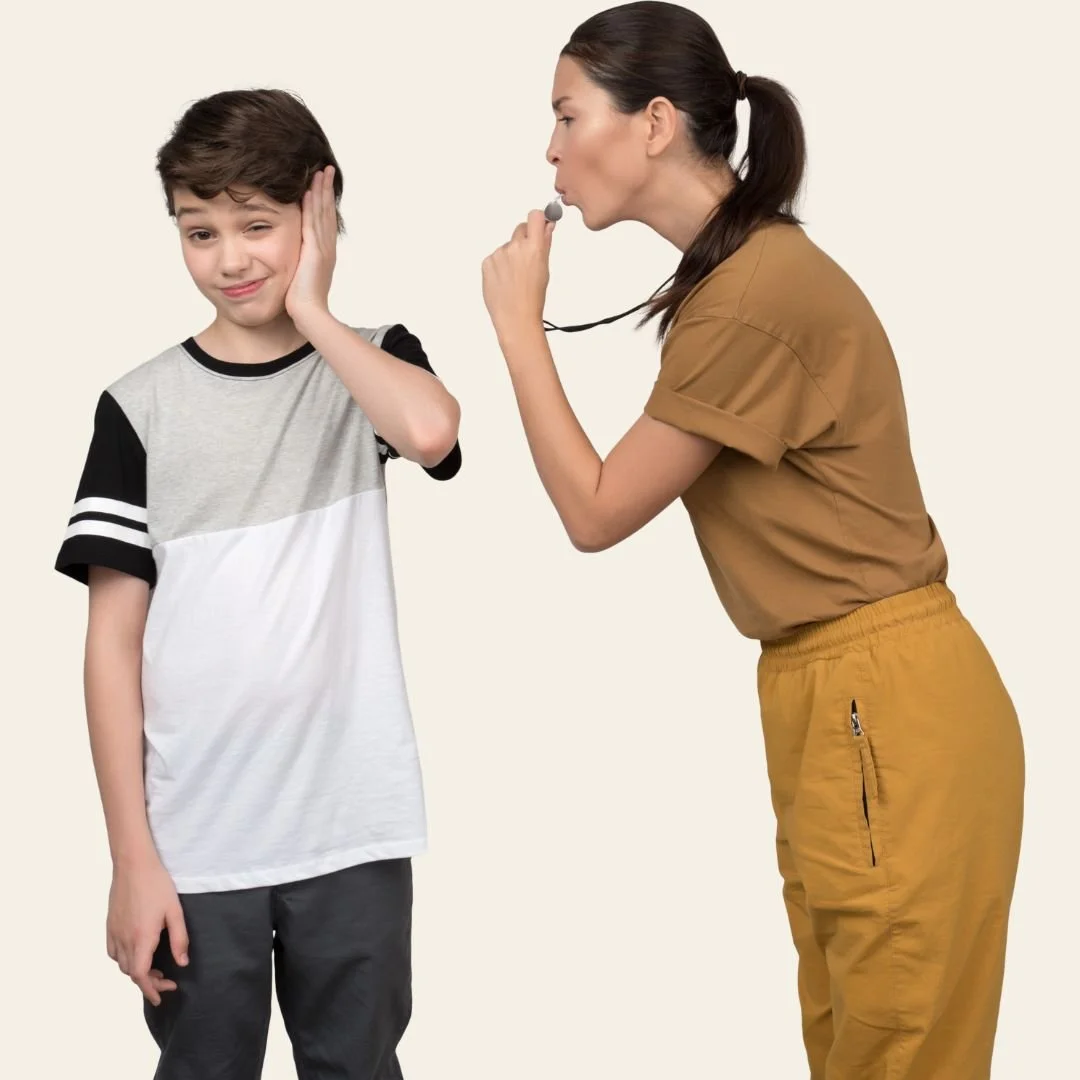
One of the more complicated questions in movement education is deciding when a child should be allowed to sit out during a game. Some adults believe participation should always be mandatory. Others believe children should always have the freedom to opt out. In a Montessori environment, however, the answer is rarely found in absolutes. The more meaningful question is not simply whether children should sit out, but rather what the child is learning by sitting out.
That distinction changes the conversation entirely.
Sometimes sitting out teaches body awareness, emotional regulation, accountability, injury prevention, or self-advocacy. Other times, it teaches avoidance, helplessness, disengagement, fear of discomfort, or withdrawal from community responsibility. The role of the teacher is not simply to enforce participation or permit avoidance. The role of the teacher is observation.
The same behavior can mean completely different things depending on the child, the environment, the developmental stage, the emotional context, and the structure of the game itself. A child asking for water may genuinely need it, while another may be using it as an escape from a challenge. A child saying “I can’t” may truly lack the developmental readiness necessary to participate meaningfully, while another may simply fear failure, discomfort, or embarrassment. A child refusing to continue a game may be emotionally overwhelmed, or they may be attempting to expose an unfair dynamic within the group. Observation allows the teacher to distinguish among these possibilities rather than relying on rigid rules.
This role of observation becomes especially important because movement itself is not optional. In many modern educational environments, physical activity is often treated as secondary compared to academic work. Yet from a Montessori perspective, movement is deeply connected to cognitive, emotional, and social development. Gross motor development is not enrichment. It is part of education itself.
A child saying, “I don’t want to play today,” is not fundamentally different from a child saying, “I don’t want to read today,” or “I don’t want to do math today.” Not every activity will be every child’s favorite. Discomfort, challenge, frustration, fatigue, and effort are all normal parts of human development. Children need opportunities to run, coordinate, balance, compete, cooperate, recover from mistakes, navigate conflict, and persist through difficulty. Movement education is not merely about exercise. It is also about learning resilience, self-regulation, social responsibility, and bodily awareness.
Participation, then, is mandatory.
But compliance is not.
Those two ideas are not the same thing.
Compliance is passive. Compliance asks children to obey without reflection. Compliance values control, silence, and unquestioning participation. But meaningful participation is something far more complex. A child can physically remain in the game while emotionally withdrawing entirely. Another child may challenge a situation because something genuinely unfair is happening. A third child may refuse participation because the environment itself has not been properly prepared for their developmental needs.
The observing teacher must learn to distinguish between avoidance and communication, between discomfort and harm, between challenge and humiliation.
While this perspective is deeply influenced by Montessori philosophy, these ideas are not exclusive to Montessori environments. Traditional PE teachers, coaches, classroom teachers, and parents all navigate the same challenges surrounding participation, avoidance, fairness, competition, and developmental readiness. Montessori education simply places unusual emphasis on observation, prepared environments, and freedom within limits. The principles themselves belong to anyone interested in helping children move, participate, and grow meaningfully within a community.
Recognizing movement as a non-negotiable part of development does not mean participation must look identical for every child. Observation again becomes central. A child who says, “I can’t,” may not need permission to disengage entirely from movement. They may instead need a modified role, scaffolded challenges, lower-pressure participation, independent skill practice, reduced complexity, or smaller group interactions. The observing teacher must determine whether the child is overwhelmed, underprepared, socially anxious, emotionally dysregulated, perfectionistic, developmentally behind, or simply avoiding effort. The intervention should emerge from careful observation rather than ideology.
One of the healthiest things children can learn through games and movement is how to interpret their own bodies honestly. There are absolutely times when children should temporarily step away from gameplay. Children may need water, a bathroom break, time to regulate their breathing, recovery from exhaustion, or space to assess a minor injury. Children should learn that hydration, fatigue, emotional regulation, and pain matter. Yet they should also learn that discomfort is normal, effort is necessary, frustration is survivable, and challenge is healthy.
The goal is not to create children who avoid struggle. The goal is to create children who can distinguish productive struggle from genuine harm.
This becomes especially important when children experience minor injuries. Some children instinctively push through everything, while others instinctively withdraw from any discomfort. Neither extreme reflects healthy self-awareness. A movement environment should help children gradually learn the difference between soreness and injury, discomfort and danger, fatigue and limitation. Observation once again guides the teacher’s response.
The observing teacher in movement education is not simply a referee or behavior manager. The teacher is constantly studying fatigue, confidence, frustration, exclusion, conflict, skill gaps, emotional regulation, fairness, avoidance patterns, group chemistry, and developmental readiness. The teacher continually asks, “What function is this behavior serving?” Is this child genuinely overwhelmed? Is this avoidance? Is the environment poorly prepared? Is the skill demand too high? Is the social pressure too intense? Is the child protecting themselves emotionally, or merely protecting comfort rather than growth?
This role of observation becomes particularly important when children ask to leave gameplay to get water or use the bathroom. Sometimes these requests are legitimate forms of self-regulation. Other times, they become patterns of avoidance. A child who consistently leaves during moments of challenge may be communicating fear of failure, low confidence, social anxiety, a developmental mismatch, emotional dysregulation, or habitual avoidance. The answer is not automatically to deny the request, nor is it automatically to permit complete freedom without reflection. The answer is observation.
At the heart of Montessori philosophy is the principle of freedom within limits. Children are given meaningful freedom, but freedom exists alongside responsibility to the community. This applies to games and movement just as much as it applies to classroom work.
A child may need to leave a game temporarily for water, the bathroom, emotional regulation, or injury care. However, that child also has a responsibility to the group. Games are communal systems. If a player suddenly disappears, teams may become unbalanced, rules may stop functioning properly, and the flow of the game may collapse. Because of this, children should communicate when they are leaving gameplay. This becomes an extension of grace and courtesy.
A child leaving the game should inform teammates and opponents as necessary, so the group can reorganize appropriately. Sometimes teams may temporarily alter rules, pause the game, take a timeout, or work on individual skills until the player returns. This preserves the integrity of the game itself. Games only function when players commit to shared expectations and shared responsibility. Casual exits and casual reentries can damage immersion, cooperation, competitiveness, fairness, and enjoyment. Children need to understand that participation in a group activity carries social responsibility.
One of the most meaningful forms of “sitting out” occurs through restorative justice. When a child carelessly hurts another player, many adults instinctively move toward punishment: removal from the game, public correction, lectures, or forced apologies. A restorative approach instead focuses on repairing the community disruption that occurred.
If a child hurts another child during gameplay, particularly through carelessness, that child may temporarily leave the game in order to retrieve an ice pack, bring water, get a bandage, provide a cold paper towel, or sit with the injured child until they are ready to return. In this situation, the child is technically sitting out, but not through punitive exclusion. The consequence emerges naturally from the disruption they caused. Their responsibility temporarily shifts from gameplay toward repair.
This teaches empathy, attentiveness, patience, accountability, emotional awareness, and practical care. Most importantly, it reconnects the child to the community rather than exiling them from it.
Conflict during games introduces another difficult gray area. Sometimes children refuse to continue participating because they are frustrated, angry, emotionally overwhelmed, or feel unfairly treated. A sudden refusal to participate can absolutely damage the integrity of the game. One player withdrawing unexpectedly may create confusion, imbalance, or frustration for everyone else. Children should not develop a habit of casually leaving and reentering games whenever emotions become difficult. Part of movement education is learning to remain engaged through frustration, to regulate emotions, to recover from mistakes, and to continue participating even when situations become uncomfortable.
A useful philosophy in these moments is simple: be fun to play with and against.
This idea reframes sportsmanship away from superficial politeness and toward preserving meaningful, enjoyable play for everyone involved. Being fun to play with and against means competing honestly, handling disappointment appropriately, respecting the flow of the game, and contributing positively to the shared experience.
At the same time, refusal to play is not always avoidance. Sometimes withdrawal is a legitimate communication. A child refusing to continue participating may be exposing unfair treatment, unhealthy competitiveness, exclusion, emotional targeting, or unsafe group dynamics. In some situations, refusal to continue may be the only tool a child has to communicate that the game's social contract has broken down.
Again, observation becomes essential. The teacher must determine whether the refusal represents avoidance, emotional manipulation, emotional dysregulation, or a legitimate protest against an unhealthy situation. There are no perfect formulas for navigating these moments. Only careful observation and thoughtful intervention.
Sometimes children sit out because the activity itself is outside their developmental zone. A game may simply be too fast, too complex, too physically demanding, or too socially overwhelming. The child may become embarrassed, self-conscious, anxious, or discouraged. In these situations, sitting out may not reflect laziness at all. It may reflect self-protection.
This is where the prepared environment becomes critically important. A well-designed movement environment should provide multiple entry points into success. The teacher should prepare modified versions of activities, scaffolded skill practice, lower-pressure repetitions, independent alternatives, and varying levels of challenge. The goal is not forced participation at all costs. The goal is meaningful participation.
Some games naturally support broad participation better than others. A cooperative “hunting-and-gathering style " game, for example, can allow students to contribute through multiple skill pathways while working together toward a collective score. Children can self-select challenges, experiment with new skills in lower-stakes ways, and contribute meaningfully at different developmental levels. More advanced tasks may earn more points while simpler tasks still contribute to the group’s success. This layered structure allows children to pursue challenge while still experiencing competence and belonging.
A well-designed game allows children to enter at different levels of mastery without humiliation.
Self-selection of teams can also become a powerful tool when handled carefully. Many adults avoid student-selected groups entirely because they fear exclusion, imbalance, or hurt feelings. Those concerns are legitimate. However, when students are developmentally ready for the responsibility, self-selection can improve engagement, ownership, cooperation, comfort, and strategic gameplay.
Interestingly, children often choose friends whose physical abilities are relatively similar to their own. This can improve gameplay significantly. When skill levels are relatively close, rallies last longer, more children successfully contribute, engagement increases, and frustration decreases. Low-skilled players being consistently dominated by high-skilled players is discouraging for the lower-skilled child and eventually boring for the higher-skilled child as well. Balanced challenge creates better play for everyone.
However, self-selection requires careful observation and preparation. If children cannot yet choose groups in a kind and fair way, full self-selection may not be developmentally appropriate. The teacher may need to scaffold the process gradually through partner selection, constrained group formation, or carefully designed team requirements.
Mixed-age Montessori environments introduce another layer of complexity. Younger and older children are often genuine friends who naturally want to play together. Social belonging matters deeply. Yet friendship does not always equal developmental parity. Older children may possess significant advantages in speed, coordination, reaction time, strength, endurance, and spatial awareness. If those gaps become too large, younger children may disengage while older children become bored.
The answer is not necessarily strict age segregation. Instead, the observing teacher may adjust rules, equipment, space, scoring systems, player roles, or objectives in order to preserve meaningful participation for everyone involved.
At the heart of all of this lies a central Montessori principle: freedom exists alongside responsibility.
Children should learn to understand their bodies, challenge themselves appropriately, regulate their emotions, repair harm, communicate their needs clearly, persist through difficulties, care for others, and participate meaningfully in community experiences. Sometimes sitting out supports those goals. Sometimes sitting out undermines them.
The difference is rarely found through rigid participation rules. The difference is found through observation.
The answers to what is happening in your PE class are already there. The avoidance, the frustration, the unfairness, the confidence, the leadership, the insecurity, the kindness, the conflict, the resilience — all of it is sitting right in front of you waiting to be observed and uncovered. That understanding is not built in a day, or even a year. But when a teacher truly leverages observation, especially in environments where children may stay with you for six, seven, or even eight years, something powerful begins to happen. You begin to know the children deeply, and they begin to know you. Trust develops. Patterns emerge. Growth becomes visible. And within that relationship lies the real goal of movement education: helping children become capable, self-aware members of a community who can challenge themselves, care for others, and participate meaningfully in shared experiences.